Which Vacuum Bell Size Do I Need? A Sizing and Fit Guide for Pectus Excavatum
Vacuum bell therapy has been described in the medical literature as a non-surgical option for pectus excavatum for more than twenty years. Pectus excavatum — the inward-sunken chest wall sometimes called funnel chest — is a structural deformity in which the sternum and the costal cartilage attached to it are displaced backwards. Non-surgical approaches rest on a straightforward mechanical principle: a controlled vacuum, or negative pressure, is applied to the outside of the chest so that the sternum is gradually drawn forward over time. The technique was systematically described in the early 2000s and has since been examined in a number of clinical series [1][2].
Two decades of clinical use suggest that vacuum bell therapy behaves more predictably in some patient groups than in others. The point that recurs across the literature is that the effect of treatment varies with the patient's age, the flexibility of the chest wall and the depth of the deformity; recent reviews therefore emphasise individual assessment before therapy begins [3]. In practice that assessment usually combines the patient's history, physical examination findings, photographic documentation and a measurement of how deep the depression actually is [3].
One of the most practical outcomes of that assessment is deciding which vacuum bell size the patient should use. The bell is the part that sits directly against the chest wall and transmits the negative pressure, so a size that does not match the patient's anatomy can affect both comfort and how effectively that pressure is delivered. This article looks first at the general sizing and fit principles described in the literature, and then at the features of the Gvacuum Vacuum Bell that correspond to them.
Why Sizing and Fit Are Taken Seriously in the Literature
Published studies generally describe vacuum bell devices as being available in several sizes, with the choice guided by the patient's age and by measurement of the anterior chest surface. The Basle series assessed a broad patient population ranging from 3 to 61 years of age and reported that the anatomical fit of the device should be treated as part of the treatment process rather than as an afterthought [2]. Size selection, in other words, is not a single measurement taken once before therapy starts; it is a natural extension of the clinical assessment.
Chest wall flexibility is the other variable the literature repeatedly links to outcome. In younger patients the cartilage is more pliable, which can make the forward lift produced by a vacuum bell more noticeable; in adults the chest wall is stiffer, so the same device may behave differently [3]. This is why the question of who the therapy suits does not have a single answer. It has to be answered together with age, flexibility, the degree of the deformity and the clinician's overall assessment.
Fit is also something to revisit during treatment, not only at the first fitting. In children and adolescents the rib cage keeps growing, so over the following months the size chosen at the start may no longer be the best match. Regular follow-up appointments are the place to check that. Sizing is a process that continues throughout treatment rather than a one-off decision.
The Seven Sizes of the Gvacuum Vacuum Bell
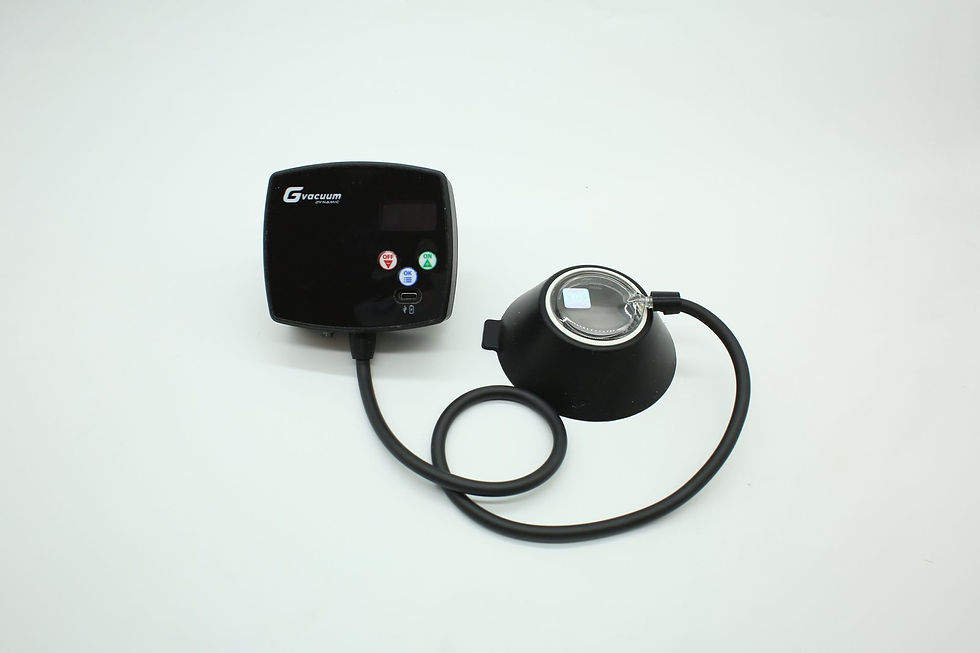
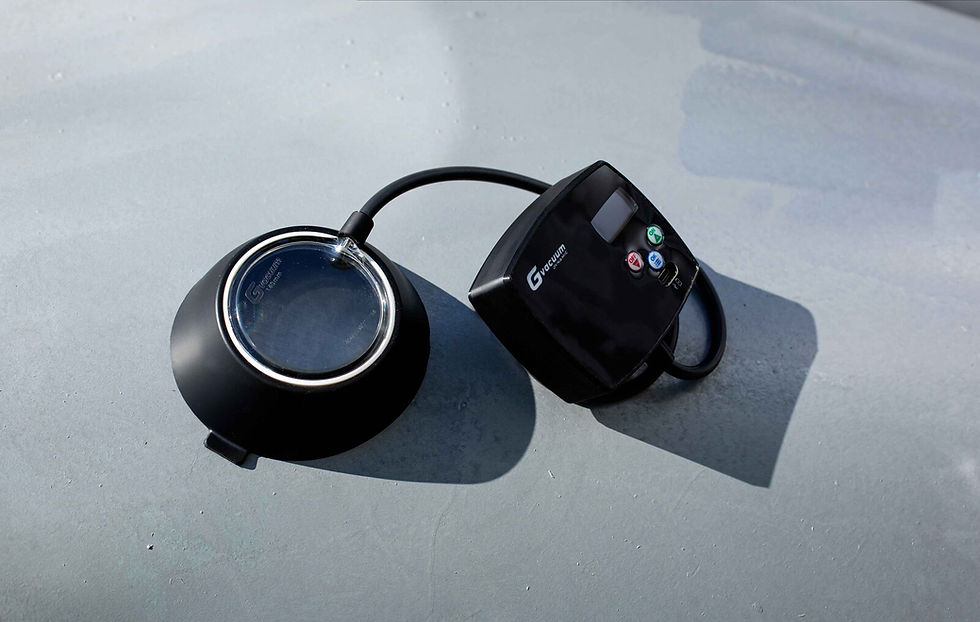
The Gvacuum Vacuum Bell is offered in seven anatomical sizes so that it can be matched to different chest shapes. This multi-size approach mirrors the patient-specific fit principle the literature emphasises: the aim is not to apply one standard size to everyone, but to identify the option closest to the patient's own chest measurements. Determining the right size is a step to take with the clinician managing treatment, before anything else is decided.
The body of the device is made from medical-grade silicone and includes an airlock mechanism designed to help it hold more securely against the chest wall. The air inlet is set at an angle and reinforced where the tubing attaches, and the pump is produced with a thicker body. These are engineering choices intended to support the physical durability of the device and the integrity of the vacuum seal under repeated daily use; they are not a claim about success rates or a guarantee of any particular result.
Daily Use and What the Package Contains
The Gvacuum Vacuum Bell package includes a spare pump, spare tubing, a carrying case and a wooden depth ruler, all intended to support uninterrupted daily use. The depth ruler is a simple, practical tool that lets a clinician or a family follow changes in the depth of the depression over time; it does not replace clinical assessment and should be seen as a complementary observation aid. The product is covered by a two-year warranty.
Large published series report a relationship between the age at which treatment starts, how long it is continued, and the result. A recent retrospective study reported more favourable findings on measures of chest depression, such as the Haller index, among patients who began treatment at age 11 or younger and continued using the device for more than 24 months; the same study suggested keeping each session under two hours and taking a short break between sessions [4]. This is a pattern observed in vacuum bell therapy generally rather than a claim about any single product, which means that adherence to the recommended routine and the duration of treatment matter alongside the correct size.
Including a spare pump and spare tubing in the package is meant to keep small everyday problems from interrupting the treatment schedule. In a therapy that runs for months, uninterrupted access to a working device can be a practical advantage when the goal is to maintain a consistent routine.
What Happens If the Size Is Wrong
A size that does not match the anatomy most often shows up as discomfort and as an ineffective vacuum. When the bell does not seat properly against the chest wall, holding the vacuum can become harder and the patient may find daily use uncomfortable. A principle familiar from orthotic treatment in general applies here too: a device that is uncomfortable to wear makes it harder for the patient to follow the recommended schedule, and that can affect how predictable the treatment becomes.
The second risk is a gradual loss of motivation, particularly among children and adolescents. A patient who cannot use the device comfortably may struggle to keep to the recommended routine, and because long-term continuation is one of the factors the literature links to outcome, the effect can compound [4]. Poor fit is therefore worth treating as something that can influence the overall course of treatment, not merely a momentary annoyance.
This is why size selection is a clinical decision rather than a choice made from a product catalogue. The patient's anterior chest measurement, age and the degree of the deformity should be assessed together, and the size or the settings should be reviewed again as treatment progresses.
Who Might Be Suitable for Vacuum Bell Therapy
In the literature, vacuum bell therapy is generally considered for mild to moderate pectus excavatum in patients whose chest wall is still flexible. Younger patients — children and adolescents — are the group most often discussed, precisely because of that flexibility, although series describing use in adults also exist [2]. The definitive decision about suitability requires a clinical assessment based on physical examination and imaging; this article does not replace that assessment.
Some families consider vacuum bell therapy as an alternative to surgery on its own, while others see it as a complementary approach before or after an operation. Both uses are described in the literature. Which one fits a particular patient is decided by the treating clinician, taking the condition of the chest wall and the goals of treatment into account. Readers looking into related questions — how long a course of vacuum bell therapy usually runs, or how daily wear time is structured — will find those topics covered separately on this blog.
Questions about sizing are common, and the Pectuslab team can provide information to families and patients who get in touch about them. The final decision about size and about how the device is used should always be made together with the clinician assessing the patient.
Setting realistic expectations is part of the process as well. Results reported in the literature vary from patient to patient, and no device or size can be said to guarantee a specific outcome; a claim of that kind could only be shared publicly after scientific and regulatory review. Size selection and the daily plan should therefore be built around the patient's own data — age, chest measurements and the degree of the deformity — with regular clinical follow-up.
Frequently Asked Questions
Can I measure and choose my vacuum bell size at home?
Because size selection is based on measurement of the anterior chest surface, a size guessed at home can result in a device that does not seat properly against the anatomy. Sizing should be done with a clinician, or alongside a clinical assessment.
Can I work out on my own which of the seven sizes fits me?
General guidance is possible, but the exact size depends on the patient's anterior chest measurement and on the characteristics of the deformity, so the final choice belongs with the clinical assessment.
Will the size change as my child grows?
The dimensions of the rib cage can change over time in growing patients. Regular follow-up appointments are the right place for a clinician to reassess whether the size is still appropriate.
Can the wrong size cause harm?
An incorrect size is not in itself dangerous, but it can affect comfort and make it harder to maintain an effective vacuum. If that happens, the size or the settings should be reviewed.
The Bottom Line
In vacuum bell therapy, choosing the right size is not a technical detail of the device — it is a clinical decision that affects how dependable the treatment can be. The literature shows that age, chest wall flexibility and the daily usage routine are all variables associated with the result. The seven anatomical sizes of the Gvacuum Vacuum Bell, its medical-grade silicone construction and the spare parts supplied in the package are engineering choices intended to carry those principles into everyday use. For patients and families the core message is simple: identifying the right size is a step to take with a clinician, before anything else is decided.
Sources
Contact Us
Have questions? Talk to our team about pectus treatment products and the right solution for you.