How Should First-Time Buyers Evaluate the Gvacuum Dynamic Lite?
How Should First-Time Buyers Evaluate the Gvacuum Dynamic Lite?
Vacuum bell therapy for pectus excavatum is a well-established conservative approach, offering a powerful alternative to surgery by applying controlled negative pressure to the chest wall for a gradual effect over time [1]. With modern devices like the Gvacuum Dynamic Lite, this approach has become far more accessible and practical for anyone who wants results without surgery. But for someone who has never tried it before, the situation is different from that of someone who has already used a vacuum bell: there is no point of comparison, no sense of "what this will actually feel like."
So for first-time buyers, the real question isn't only "are this device's features good enough" — it's "what is vacuum bell treatment generally like, and how do I make a sound decision without that experience?" Recent literature emphasizes that one of the strongest predictors of outcome in vacuum bell therapy is simply consistent, compliant use [2]; thinking through how you'll build that consistency with the Gvacuum Dynamic Lite before you ever use it makes the whole process after your purchase far more enjoyable and trouble-free.
This guide is for people who have never used any vacuum bell device before — not the Gvacuum Dynamic Lite, not any other model — and are just starting to research the topic. It focuses less on what experienced users already know, and more on what a true beginner is likely to overlook.
1. What to Understand Before You've Ever Tried a Vacuum Bell
A vacuum bell can be thought of as an orthopedic device that applies controlled suction to the chest wall; it isn't a one-time procedure but a routine repeated over weeks and months [1]. If you've never experienced it, understanding this repetition requirement clearly before buying prevents a common confusion later: "did I pick the wrong device, or was my expectation simply unrealistic?"
The biggest risk for a first-time evaluator is researching brands and models before confirming that the method itself is right for their situation. Seeing a specialist first — a thoracic surgeon, pediatric surgeon, orthopedist, or physical therapist — to establish whether vacuum bell therapy fits your case comes before the question of which device to choose.
In practice, a session involves placing the cup on the chest wall, gradually bringing the pressure up to the target level, and holding it there for the set duration before easing off at the end. Knowing this general flow in advance helps you focus on your specialist's guidance during your first sessions, rather than wondering whether what you're feeling is normal.
2. Which Gvacuum Dynamic Lite Features Matter Most for First-Timers
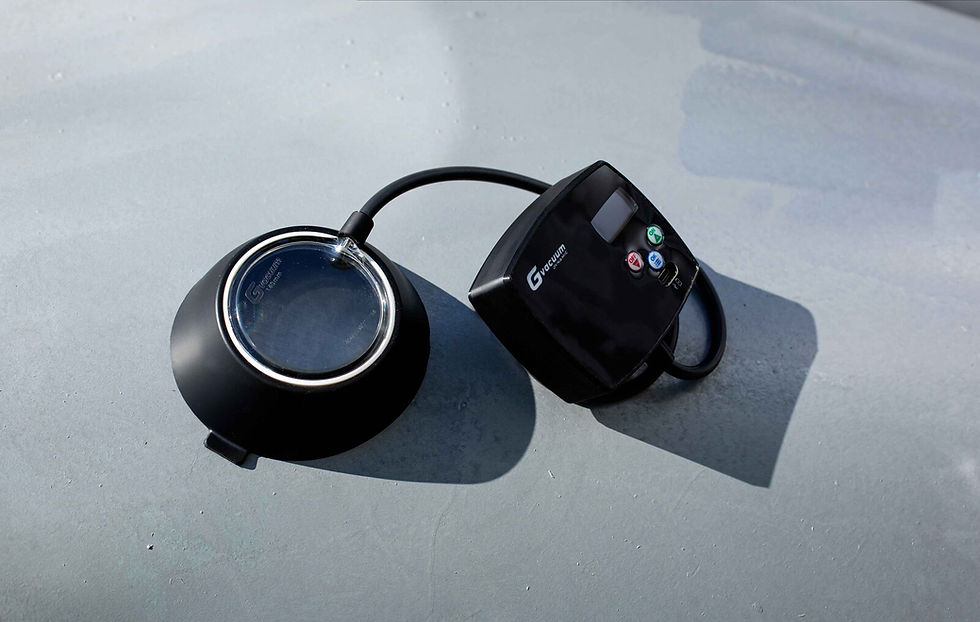
For someone who has never used a vacuum bell before, learning naturally takes a little more time and attention than it does for an experienced user — and this is exactly where the Gvacuum Dynamic Lite stands out: its simple three-button interface and Quick Start feature cut that learning time dramatically. These features are designed to let you begin your first sessions with confidence, without a separate learning process just to operate the device.
The vacuum bell's presets, adjustable to different needs, are also a real advantage for first-timers: rather than guessing your way to the right preset through trial and error, having your specialist set it correctly from the start removes the uncertainty in your early sessions entirely. The target-pressure maintenance feature, meanwhile, removes the need to manually monitor pressure throughout a session altogether, letting a beginner focus fully on their body's response rather than the device's technical details.
Together, these features make the Gvacuum Dynamic Lite one of the most user-friendly vacuum bell devices on the market for first-time users: they shorten the time it takes to get comfortable with the device and let you begin your sessions with confidence and ease.
3. What Should You Expect in Your First Sessions?
The most common mistake among first-time users is expecting a visible change within the first few sessions; the consistent point in the literature is that outcomes depend on weeks and months of regular use, not any single session [2]. Early sessions should be judged by whether you're learning to use the device correctly and comfortably — not by whether you've achieved a result yet.
Gradually increasing the pressure over the first sessions, working up to the level your specialist recommends, is the expected process; there's no need to aim for the highest pressure setting on day one. Getting comfortable with the fit, learning what the pressure feels like, and figuring out where sessions fit into your daily routine are what matter most for sticking with it in the following weeks.
4. Questions Worth Asking Your Specialist
A first-time evaluator may not know many of the practical details an experienced user already takes for granted — which is why it helps to prepare specific questions for your first consultation. Questions like "what starting pressure and duration is recommended for my case," "how often will I need a check-in during the first few weeks," and "which preset is recommended for me" help you walk into your first sessions better prepared.
Before buying, it's also worth asking how after-sales support works — remotely or in person — since knowing how to reach that support for practical early questions (getting the fit right, fitting sessions into your routine) reduces uncertainty.
5. How Device Features Strengthen the Treatment's Effectiveness
Once a specialist confirms that vacuum bell therapy is a good fit for you, what makes the Gvacuum Dynamic Lite stand out is how precisely its features match your daily-use needs. These are two separate steps: the first is a specialist's examination, and the second is evaluated together once the method's suitability is confirmed, based on your daily-use needs.
The Gvacuum Dynamic Lite's live pressure and target-pressure display, along with its automatic pressure maintenance, increase the effectiveness of the treatment by helping ensure it is applied correctly, consistently, and without interruption — which also makes day-to-day use far easier, more reliable, and more sustainable.
The Gvacuum Dynamic Lite's rich feature set is designed to be anything but complicated — in fact, it's built to be exceptionally user-friendly: the simple three-button interface lets you focus directly on consistent use, without putting in extra effort to learn digital features. Which presets suit you best is then easily worked out together with your specialist, based on your own habits.
Pectuslab can be reached directly for questions from first-time evaluators; the final decision, though, should always rest on a direct specialist examination.
6. A Simple Habit Worth Building as a Beginner
One simple habit that can help first-time users is jotting down a few notes after each session — duration, pressure level reached, and a general comfort rating is enough. These notes aren't a diagnostic tool; they just make it easier to bring concrete information to your next check-in.
A short log like this means you don't have to rely on memory to answer "where were we last week" — which tends to make follow-up conversations with your specialist more productive, especially in the first few weeks.
Frequently Asked Questions
I've never used a vacuum bell — should I start directly with the Gvacuum Dynamic Lite?
Which model to start with depends on your specialist first confirming the method itself is suitable for you, and then on your daily-use needs. For first-timers, a simple interface and Quick Start can ease the learning process, but the model itself isn't a starting point on its own.
Should I set the pressure as high as possible in my first session?
No — pressure is meant to increase gradually over the first sessions, working up to the level your specialist recommends. There's no need to aim for a high setting on day one.
How long does it take first-time users to learn the device?
The simple three-button interface and Quick Start feature are designed to shorten that learning process, but specialist guidance during the first sessions still matters for choosing the right preset and increasing pressure gradually.
When is progress actually assessed?
Progress is assessed at check-ins planned together with your specialist; as the literature emphasizes, this is about sustained regular use over time, not any single session [2]. The first check-in is usually scheduled by your specialist.
Closing
For first-time vacuum bell buyers, the real evaluation comes down to understanding the method itself, setting realistic expectations for your first sessions, and asking your specialist the right questions. With its simple interface, Quick Start feature, and smart preset options, the Gvacuum Dynamic Lite stands out as one of the most user-friendly solutions available for anyone seeking results in pectus excavatum treatment without surgery; the final suitability decision always rests on a specialist's evaluation.
Sources
1. Haecker FM, Mayr J. "The vacuum bell for treatment of pectus excavatum: an alternative to surgical correction?" European Journal of Cardio-Thoracic Surgery, 2006. academic.oup.com/ejcts/article/29/4/557/478894
2. Koo DC, et al. "Optimizing Efficacy of Vacuum Bell Therapy for Pectus Excavatum: Compliance is Key." Journal of Surgical Research, 2025. pubmed.ncbi.nlm.nih.gov/40088797
Sources
Contact Us
Have questions? Talk to our team about pectus treatment products and the right solution for you.