Gvacuum Dynamic Lite Vacuum Bell Presets (Preset-Custom Set): Which One Fits Your Needs?
What Actually Determines the Result in Vacuum Bell Therapy: Daily Consistency
In vacuum bell therapy, the result depends less on how much pressure is applied in a single session than on how consistently that pressure is applied every day. The foundational study by Haecker and Mayr, which first described the vacuum bell approach for pectus excavatum, found that regular, uninterrupted use is a precondition for this conservative approach to work [1]. A systematic review by Kumar and colleagues, covering 27 studies and 2,644 patients, reached a similar conclusion: treatment compliance is one of the strongest predictors of clinical outcome, regardless of the specific device used [2]. The practical implication is straightforward: the less time and attention it takes to start a session and reach the right configuration, the more likely that session is to be repeated day after day. Features that make daily use easier are therefore not a minor technical detail but something that supports the sustainability of treatment itself - which is the lens this article uses to look at the Gvacuum Dynamic Lite's vacuum bell presets and who actually needs them.
What Does the Vacuum Bell Presets Feature Actually Do?
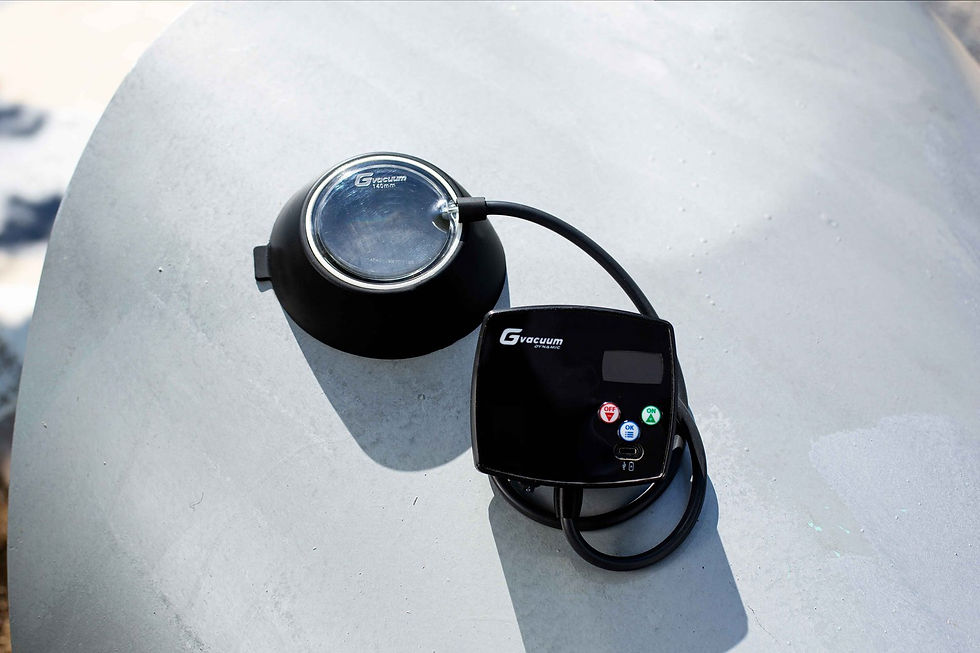
The vacuum bell presets feature on the Gvacuum Dynamic Lite's control unit lets the device remember a configuration you have already set and approved. Thanks to the device's 10-step pressure control and its target-pressure hold mechanism, once a pressure level is reached it is maintained for the rest of the session; a preset simply stores that configuration so it can be recalled later without manually repeating the same steps each time. In practice, this means you do not have to rebuild the pressure from zero at the start of every session - you can return directly to a configuration your clinician has already reviewed. The session starts faster, but the pressure itself and the logic of the target-pressure hold mechanism do not change - presets only affect how quickly you reach a configuration that already exists.
When Do You Actually Need a Different Preset?
A single device may need to serve more than one need over time, or across different users. As treatment progresses, a clinician may update the target pressure based on how well a patient is adapting; saving that new setting as a separate preset, rather than overwriting the old one, lowers the risk of confusing which configuration is current. A similar need can come up in households where more than one person uses the same device - each person may have a different clinician-recommended target, and separate presets help keep those configurations from getting mixed up. Users who prefer a different routine at different times of day can benefit from the same logic, and during travel or unusually busy periods, having a preset already saved for that temporary routine can help preserve consistency until the regular routine resumes.
How Do Different Vacuum Bell Options Relate to Presets?
Different sizes of vacuum bell can connect to the same Gvacuum Dynamic Lite control unit, within the same product family. Which cup to use, and what pressure is appropriate with it, is a decision made by the clinician based on chest wall anatomy and the specifics of the deformity. One important point to keep in mind: switching to a different cup does not mean the previous pressure setting automatically remains appropriate. A different cup can call for a different clinical assessment of pressure than the one used before - which is why it is safer to save each new cup-and-pressure combination as its own preset only once it has been reviewed by the clinician. For patients using more than one cup, pairing each with its own preset moves the responsibility of remembering which pressure goes with which cup from memory onto the device itself.
Which User Profile Benefits Most from Presets?
For patients on long-term treatment, saving each update to the target pressure as its own preset makes it easier to stay aligned with the current plan without confusing it with earlier settings. In households where more than one family member shares the device, a separate preset for each user makes it easier to confirm the right configuration before a session starts. For users fitting treatment around work, school, or a busy schedule, being able to switch quickly between presets saved for different times of day can help a session happen even on a tight day. For people just starting treatment, a single preset matching the clinician's initial configuration is usually enough - the benefit of multiple presets tends to show up later, as needs become more varied.
How Do You Build Presets into a Daily Routine?
The benefit of presets shows up once they have been set up correctly. Once you and your clinician have agreed on which cup and target pressure are appropriate, saving that configuration as a preset removes the need to repeat the same steps in every later session. What is left for the user is making sure the right preset is selected before a session, and confirming on the display that the device has reached the expected pressure during it. If more than one preset is in use, noting what each one is for ("morning routine" or "current target", for example) is the simplest way to avoid mixing them up. Especially with children, it is worth having a parent or caregiver decide which preset to use, and checking that the choice still matches the clinician's latest recommendation.
Presets Are a Separate Layer from the Quick Start, Preset, and Custom Set Operating Modes
As covered elsewhere, the Gvacuum Dynamic Lite has three separate operating modes that determine how pressure is applied over time: Quick Start (a single target pressure with no time limit), Preset (a 2-hour flow following one of the built-in programs), and Custom Set (a 2-hour flow the user designs themselves). The vacuum bell presets feature described here is a separate layer from these operating modes: whichever mode you choose, it lets you save and recall the values used in that mode instead of entering them manually every time. Put another way, the operating mode decides how pressure changes over the session, while a preset decides how quickly you get back to that configuration. This matters especially for patients who combine different operating modes - someone who uses Quick Start in the morning and Preset in the evening can define a separate preset for each without mixing the two routines together.
How Do Electronic Presets Differ from the Manual Pump Model?
Vacuum bell presets are specific to the Gvacuum Dynamic Lite's electronic control unit and have no equivalent on the Gvacuum Vacuum Bell Manual model. On the manually-pumped model, every session requires rebuilding the pressure step by step with the pump - there is no stored or remembered configuration, and if pressure drops over time the user has to pump again. On the Gvacuum Dynamic Lite, the target-pressure hold mechanism maintains pressure automatically, and presets go a step further by removing the need to re-enter that held configuration by hand each time. Both models rely on the same underlying vacuum bell treatment principle, and what determines the outcome, independent of the model, is daily consistency [1][2] - presets are simply an extra layer that makes maintaining that consistency easier.
What Should You Watch for When Using Presets?
Vacuum bell presets are not a substitute for a clinician's judgment - they only make it faster to reach a configuration that has already been approved. A preset should not be treated as something that, once saved, stays correct indefinitely; as treatment progresses and a clinician's recommendation changes, the relevant preset needs to be updated too. Presets also do not replace the general rule of watching your skin and overall condition during a session - if something feels wrong, the session should stop regardless of which preset is in use. If there is any doubt about whether an older preset is still current, it is worth checking with a clinician before reusing it.
Frequently Asked Questions
How many different configurations can the vacuum bell presets store on the device?
This depends on what the user and clinician actually need; what matters is not the number but making sure it is clear which cup and target pressure each preset corresponds to.
Does the pressure adjust automatically when a preset is selected?
Yes - selecting a saved preset brings the device to the previously defined target pressure on its own, without the user needing to adjust it step by step again.
Do presets also remember which vacuum bell cup was used?
Keeping track of which cup a preset is meant for is the user's and clinician's responsibility; when switching cups, it is important to confirm the right preset has been selected.
Does using presets affect session safety?
No. Presets only speed up reaching a configuration that is already been approved; the target-pressure hold mechanism and the general precautions that apply during a session remain exactly the same.
How often should presets be reviewed?
That depends on the treatment plan set by the clinician; a preset is worth reviewing whenever a change to the target pressure is recommended or the vacuum bell cup in use changes.
Closing
Vacuum bell presets do not change the outcome of treatment on their own - as the literature makes clear, what determines the result is how closely the pressure plan is followed day to day [1][2]. But being able to reach the right configuration quickly can be a practical detail that helps maintain that consistency, especially on busy days. Pectuslab recommends speaking with a specialist about which preset and which vacuum bell cup is right for you or your child.
Sources
Contact Us
Have questions? Talk to our team about pectus treatment products and the right solution for you.