Why Vacuum Bell Material and Vacuum Quality Matter
Families starting vacuum bell treatment often ask a practical question once they realize the device will stay in contact with the skin for weeks: what material is it made from, and is it safe for the skin? The answer has two parts - the material itself, and how consistently the device holds vacuum.
This article does not make any success-rate or guarantee claims. The goal is to explain, in general terms, why material choice and vacuum quality matter in Gvacuum vacuum bell devices. Which model suits a particular person is always an individual decision.
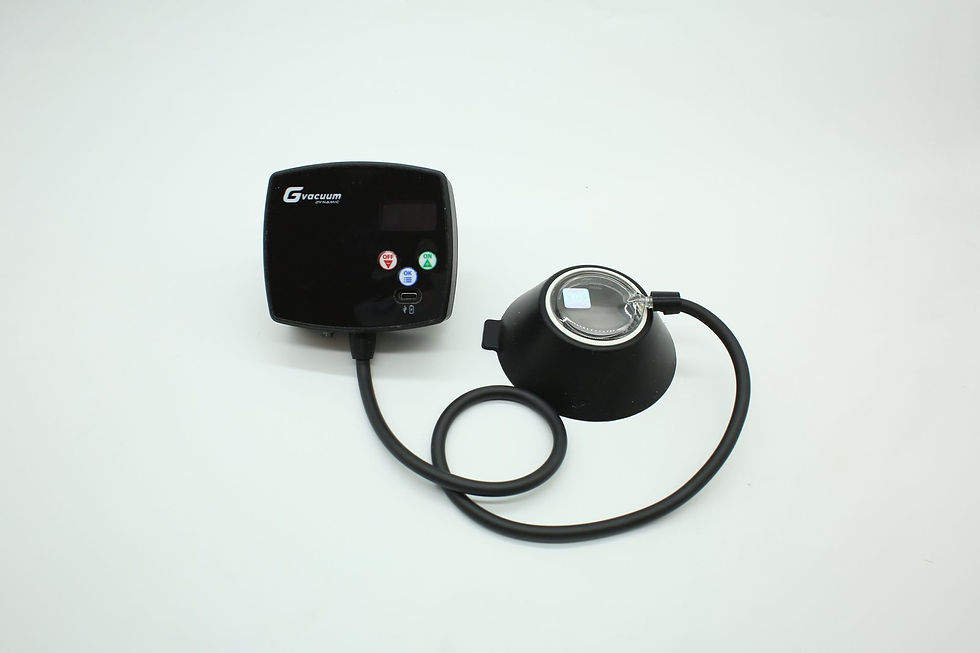
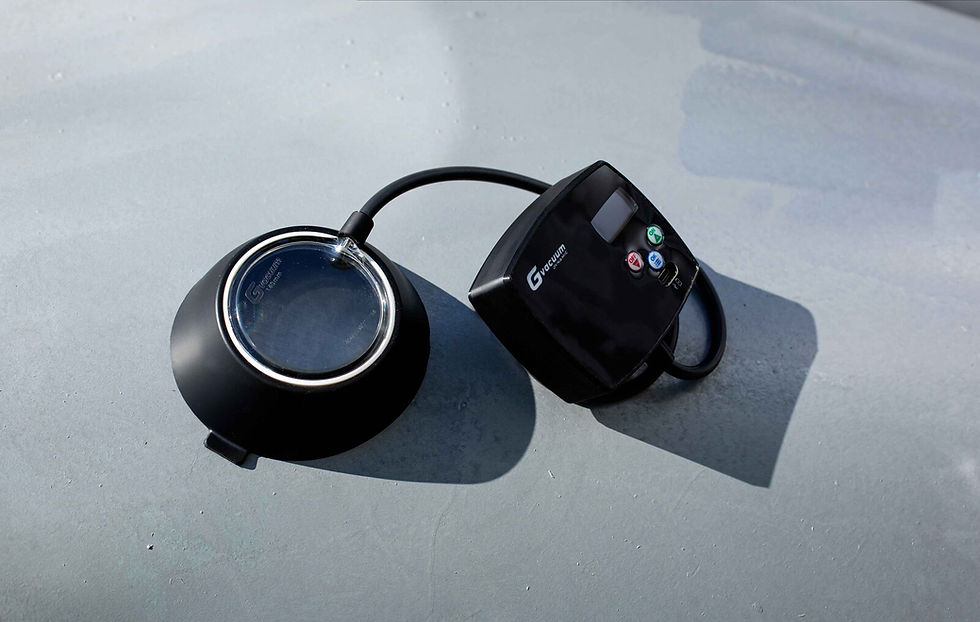
The silicone edge that contacts the skin helps the vacuum bell seal evenly.
These questions usually come up while families are researching before a purchase. Having a general understanding of the material and mechanical design helps set realistic expectations and know what to pay attention to during daily use.
Why the Skin-Contact Part of a Vacuum Bell Matters
In vacuum bell treatment, the part of the device that sits against the chest wall stays in direct, prolonged contact with the skin throughout the session. Because of this, the material of that part matters not only for holding the vacuum, but also for avoiding daily discomfort.
For any medical device part that stays on the skin for long periods, material selection is generally done carefully; flexible materials that make relatively gentle skin contact and hold up to repeated use are preferred. In our Gvacuum vacuum bell products, the skin-contact part is made from medical-grade silicone.
What It Means That This Product Uses Medical Silicone
Medical-grade silicone is a material widely chosen for skin-contact medical devices; its flexibility lets it conform more evenly to the curve of the chest wall. That matters for a device that needs to hold vacuum, because the more even the skin-device contact surface is, the more consistently the vacuum is maintained.
What does "medical silicone" mean in general? In the industry, the term describes silicone made from high-purity raw materials under strict quality control, and evaluated against international biocompatibility standards such as those in ISO 10993, which assess irritation, sensitization, and toxicity risk on skin/tissue contact [1]. This category of material is generally chosen for wearable medical devices partly because of this: it makes relatively gentle skin contact and is widely considered hypoallergenic due to its inert, non-organic structure [2].
That said, a detailed report on which specific certification or testing steps the exact silicone component used in Gvacuum has undergone is beyond the scope of this article; for that level of detail, please contact our team directly.
Other Factors That Determine Vacuum Quality
Beyond the material of the skin-contact part, how consistently the device holds vacuum also matters. In the Gvacuum family, a few mechanical elements support this consistency: an airlock system, an angled inlet design, a reinforced hose, and a thicker-bodied pump.
The airlock system helps prevent sudden vacuum loss if the connection loosens or is accidentally opened once vacuum has been created. The angled inlet reduces daily strain on the hose, and the reinforced hose plus thicker pump body are intended to make the device more resistant to repeated use.
None of these elements on their own means a guaranteed result; they are design choices aimed at supporting expected day-to-day performance. Because every patient's chest wall is different, how the device sits and holds vacuum can vary from person to person.
Why Consistent Vacuum Quality Matters for Treatment
In vacuum bell treatment, the device being able to hold the targeted pressure relatively steady throughout a session helps make the treatment experience more predictable. We covered this topic in more depth, from a clinical-literature angle, in a separate article on pressure consistency and treatment outcome; here the focus is on the material and mechanical design elements that support that consistency.
Another element supporting this consistency in the Gvacuum family is the digital pressure feature of the Gvacuum Dynamic Lite Vacuum Bell: its 10-level pressure adjustment and target-pressure hold help track and maintain pressure electronically during a session. This can be thought of as a digital layer added on top of the material and mechanical design.
When vacuum is lost frequently, a session can be interrupted and the device may need re-adjusting, which can be a practical daily inconvenience. Material, mechanical design, and - in the case of Dynamic Lite - digital pressure tracking working together aim to reduce this kind of interruption.
Which Model Fits Which Need?
The two models currently on the market, the Gvacuum Vacuum Bell Manual and the Gvacuum Dynamic Lite Vacuum Bell, share the same basic material and mechanical approach; the difference is in how pressure is monitored and adjusted. The Manual model offers simpler, hand-pump-controlled use, while Dynamic Lite adds 10-level pressure adjustment and target-pressure hold.
Which model suits a particular person depends on age, daily usage habits, and a specialist's assessment; this article is general information, not a model recommendation. The final choice should always follow an individual examination.
Points Families Can Pay Attention To
Keeping the skin-contact part clean and following the instructions that come with the product matters both for hygiene and for the vacuum working as expected. If any wear, cracking, or unexpected vacuum loss is noticed, it's advisable to contact our team before continuing to use the device.
For families new to using the device, a simple visual-check habit can help: occasionally looking at the silicone edge for discoloration, hardening, or surface roughness makes it easier to track the device's condition over time. This isn't a diagnostic or technical test method - just a simple observation that can be made during everyday use.
Frequently Asked Questions
Can the skin-contact part of a vacuum bell cause an allergic reaction?
Medical-grade silicone is widely used in skin-contact medical devices and is generally considered hypoallergenic; however, every skin can react differently. If redness, irritation, or discomfort occurs, it's advisable to consult a specialist before continuing use.
What should be done if vacuum is lost frequently?
Frequent vacuum loss is a situation where connection points should be checked. If the problem continues, it's advisable to contact our team before continuing to use the device.
Should I choose the Manual model or Dynamic Lite?
This is a personal decision that depends on age, daily usage habits, and a specialist's assessment. Both models share the same basic material approach; the difference is whether pressure is tracked digitally (Dynamic Lite) or with a hand pump (Manual).
Closing
In Gvacuum vacuum bell treatment, material choice and vacuum quality are two fundamental factors that support the device's day-to-day usability and predictability. Medical-grade silicone at the skin-contact point, mechanical elements like the airlock, angled inlet, and reinforced hose, and - in the Dynamic Lite model - digital pressure tracking, work together toward consistent performance; however, individual experience can vary, and a final assessment should always be made by a specialist.
Sources
Contact Us
Have questions? Talk to our team about pectus treatment products and the right solution for you.