Practical Ways to Improve Treatment Compliance with Gvacuum Dynamic Lite
Practical Ways to Improve Treatment Compliance with Gvacuum Dynamic Lite
Vacuum bell therapy for pectus excavatum (shoemaker's chest) has long been described in the literature as a non-surgical, conservative approach that applies controlled, repeated external suction to the chest wall to help the cartilage gradually remodel over time [1]. The principle itself is straightforward, but it only works as a months-long daily habit - so the variable that actually determines the outcome is rarely the device's technical specifications, and almost always how consistently the patient keeps up the routine.
A recent study highlights that the clinical benefit of vacuum bell therapy depends heavily on compliance with regular use, and that practical factors - ease of use, low discomfort, and visible progress - influence that compliance in a strong, if indirect, way [2]. Building on that general principle, this article looks at the practical features Gvacuum Dynamic Lite offers to support day-to-day compliance, along with concrete habits families can put into practice on their own.
Why Compliance Matters So Much for Treatment Outcomes
A well-established principle across orthopedic brace treatments in general (scoliosis, pectus deformities and similar conditions) holds that outcomes depend largely on whether the patient uses the device for the recommended duration and schedule. This isn't a brand-specific claim - it's a widely accepted principle in conservative orthopedic treatment literature, and the same logic applies to vacuum bell therapy [1][2].
The most common reasons for poor compliance are small, repeated frustrations: the device feeling complicated to use, sessions not fitting naturally into the daily schedule, mild skin irritation, or having to re-find the right pressure setting every time. Each of these looks minor on its own, but repeated daily over months, they can shorten actual wear time and eventually interrupt treatment altogether.
Features That Simplify Setup and Getting Started Each Day
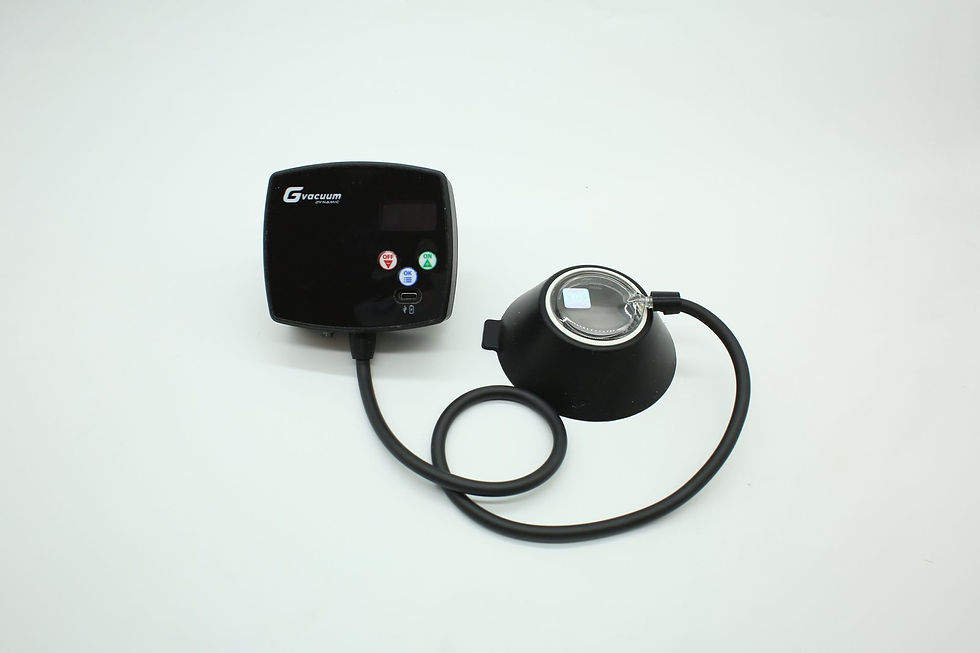
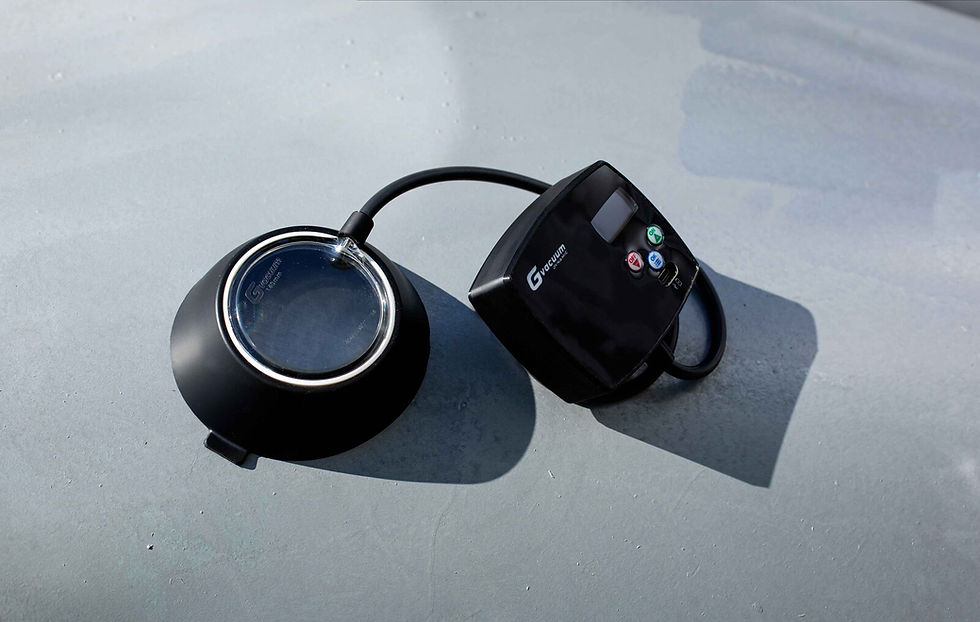
Gvacuum Dynamic Lite has a simple three-button interface (plus, minus, menu) and a Quick Start function, which reduces the need to go through a complicated setup process every time a session begins. For a patient or parent new to treatment, that simplicity removes one of the biggest barriers to picking the device up every single day.
The device also includes saved vacuum-bell pressure presets, so instead of manually finding the pressure range set by the clinician each time, the patient or family can simply select a saved setting and start the session. That turns daily use from a technical task into an ordinary routine - a small but meaningful detail that supports compliance.
How the Live Pressure and Time Display Supports Motivation
Dynamic Lite's digital screen shows live pressure and elapsed time throughout the session, letting the patient and family see in real time whether the current session is tracking with the planned target. As that uncertainty decreases, confidence and motivation can improve, especially in children and adolescent patients - whereas not being sure the device is working correctly is a common factor that weakens compliance over long treatment courses.
Automatic target-pressure maintenance also reduces how much the patient needs to manually intervene during a session, which makes daily use less tiring, particularly for sessions squeezed between school or work hours.
Practical Tips for Fitting Treatment into a Daily Routine
Making sure the vacuum bell sits against the chest wall the same way at every session is a simple habit that supports consistent pressure; if it sits slightly shifted or at an angle, comfort can drop even when the displayed pressure value looks correct. Taking a few seconds to check this at the start of every session reduces the risk that discomfort later shortens the session.
One of the most effective ways to improve compliance is anchoring the session to a fixed time of day (for example, right after breakfast or right before bed), so that use stops being a separate task to remember and becomes a natural part of the daily routine. Simple reminder or alarm apps on a phone can also help this habit take hold, especially in the first few weeks of treatment.
If discomfort comes up during a session, it's worth raising it with the clinician rather than pushing through it; a small adjustment to pressure or to the vacuum bell's position can restore comfort and prevent sessions from shrinking over time. Regular follow-up visits give these small adjustments a chance to happen on schedule.
Common Barriers to Compliance and General Ways to Address Them
One of the most common barriers is not knowing how to fit the device into a school or work schedule; in that case, rather than cramming treatment into one long block, working out a shorter, repeated, spread-out schedule together with the clinician is usually more sustainable. This kind of planning is not a technical feature of the device - it's part of the treatment process carried out together with the clinician.
A second barrier is motivation fading over time, particularly once the novelty of the first few weeks wears off; regular, non-judgmental check-ins between the family and clinician can help sustain adherence. A third barrier is mild skin irritation, which is usually manageable with a position or duration adjustment - but a persistent or worsening irritation should be brought directly to a specialist.
How Tracking Progress Supports Compliance
Jotting down which day, at what pressure level, and for how many minutes each session ran is a simple but effective habit; it lets the patient see their own progress in concrete terms and helps the clinician assess the process more clearly at follow-up visits. Over a treatment that lasts months, day-to-day progress can be hard to notice - a regular log reduces that invisibility and helps sustain motivation.
This kind of tracking doesn't need to be complicated; a simple paper table or a notes app on a phone is enough. What matters is that the log is kept consistently and can be shared with the clinician at follow-up visits, so that any small adjustments to pressure or duration can be made in time.
Frequently Asked Questions
If compliance drops, does treatment have to start over? No - but inconsistent use can slow the planned progress. That's why it's worth raising a drop in usage frequency with the clinician early, so the plan can be reviewed.
Do Gvacuum Dynamic Lite's features guarantee compliance? No, a direct guarantee would not be accurate - any such claim would first require scientific and regulatory review. The device's simple interface, quick-start function, and live display are designed to reduce the practical barriers to daily use, but adherence still depends largely on the patient's and family's daily habits.
When should compliance issues be discussed with a specialist? A noticeable and ongoing drop in wear time, persistent skin or comfort issues, or any doubt about whether the device is working as expected should be raised directly with a specialist; since the most relevant specialty can vary by findings, this may mean a thoracic surgeon, pediatric surgeon, orthopedic specialist, or physical therapist.
Conclusion
Success in vacuum bell therapy depends largely on how consistently daily use is maintained - and that consistency is not a technical detail, but a clinical variable at the center of the treatment. Gvacuum Dynamic Lite's simple interface, quick-start function, saved pressure presets, and live pressure/time display are design choices aimed at reducing the practical barriers to that daily consistency.
The approach that benefits families and patients most is anchoring the device to a fixed routine, raising discomfort early, and reviewing the process with the clinician at regular intervals. Compliance isn't a one-time decision - it's a habit sustained together over time.
Sources
1. Haecker FM, Mayr J. "The vacuum bell for treatment of pectus excavatum: an alternative to surgical correction?" European Journal of Cardio-Thoracic Surgery, 2006. academic.oup.com/ejcts/article/29/4/557/478894
2. Koo DC, et al. "Optimizing Efficacy of Vacuum Bell Therapy for Pectus Excavatum: Compliance is Key." Journal of Surgical Research, 2025. pubmed.ncbi.nlm.nih.gov/40088797
Sources
Contact Us
Have questions? Talk to our team about pectus treatment products and the right solution for you.