Why Tracking Wear Time and Pressure Changes Brace and Vacuum Bell Follow-Up
Long-term brace and vacuum bell treatments share one practical reality: what matters is not a single office visit, but what happens every day, for months, at home. For decades, clinicians have relied mostly on what patients and families report about that daily use. A newer and steadily growing body of literature asks a more direct question: what do we see when wear time and pressure are actually measured, rather than recalled?
This article summarizes what published orthopedic and pectus literature says about monitoring technology - sensors that record pressure, wear duration, and related parameters - and how that data has been shown to support clinical decision-making. It draws on general, peer-reviewed findings rather than any single clinic's patient records, and it does not attribute a specific success rate or outcome guarantee to any product.
The question is relevant across very different devices - spinal braces, pectus carinatum braces, and vacuum bell systems for pectus excavatum - because they share the same structural challenge: a long, repetitive, largely unsupervised treatment process where the gap between intended use and actual use can be wide, and where that gap is difficult to see without some form of objective record.
Why “Did You Wear It?” Is Often the Wrong Starting Point
Self-reported wear time is known to run into a familiar problem: recall and social-desirability bias. Patients and families generally want to give a good answer, and daily habits are hard to reconstruct accurately over weeks or months. This isn't a matter of dishonesty so much as how memory works - a missed afternoon here, a shortened evening session there, tend to blur together by the time of a follow-up visit.
This gap matters clinically because so much of brace and vacuum bell treatment depends on dose - not just whether the device is used, but for how long, how consistently, and under what pressure. Without an objective record, a clinician is often making decisions - adjusting a plan, deciding whether to continue conservative treatment, or discussing next steps - based on an estimate that may not reflect what actually happened.
What Objective Monitoring Has Shown in Orthopedic Bracing Research
One of the most cited examples comes from adolescent scoliosis bracing, where a heat-sensor embedded in the brace was used to objectively record wear time in a multi-year study. The recorded hours were often lower than what patients reported, and - importantly - the study found a clear relationship between measured wear time and treatment outcome: more objectively recorded hours corresponded with a lower rate of curve progression [1].
This finding is often cited beyond scoliosis literature because it demonstrates a broader principle relevant to any long-term brace treatment: compliance is not just a behavioral side note, it is a measurable variable that tracks with outcome, and measuring it - rather than assuming it - changes what a clinician can actually say about how a treatment is going.
Pressure and Duration Data in Chest Wall Treatments
In pectus carinatum bracing specifically, published work has looked at quantifying the compression force applied and how gradual, well-controlled pressure relates to patient comfort and reported compliance [2][3]. The general takeaway across this literature is consistent with the scoliosis findings: a brace that a patient can tolerate long enough to actually wear on the recommended schedule tends to produce more predictable results than one that is technically correct in design but poorly tolerated in practice.
For vacuum bell treatment of pectus excavatum, more recent research has gone further, directly framing compliance - the recorded consistency of use - as one of the central factors determining whether treatment reaches its intended result [4][5]. That shift in emphasis, from “does the device work” to “was it actually used as intended, and how do we know”, is precisely the kind of question that monitoring technology is designed to answer.
Turning Monitoring Data Into Clinical Decisions
Recorded pressure and wear-time data are useful only to the extent that they change what happens next in a treatment plan. In practice, the literature and general clinical reasoning point to a few concrete uses: identifying low or inconsistent use early, rather than several months into treatment; distinguishing between a device that is not being worn and one that is being worn but not tolerated well, which call for very different responses; and giving a clinician an objective basis for a conversation about adjusting pressure, wear schedule, or - when conservative treatment is genuinely not working - discussing other options.
None of this replaces clinical judgment - a number on a chart does not make a decision by itself. What it does is remove some of the guesswork from that judgment, so that adjustments to a treatment plan are based on what is known to have happened rather than on an approximation. This is particularly relevant for younger patients and adolescents, where day-to-day motivation can fluctuate and where an early, data-informed conversation can be more useful than waiting for a scheduled check-in months later.
Where Monitoring Technology Is Heading
The general direction in the field is toward connected, digital monitoring - sensors that record parameters such as pressure, duration, frequency, and temperature, paired with a mobile application and a clinician-facing portal that can review that data between visits, rather than only at the next appointment. This mirrors the broader shift already documented in the scoliosis and pectus literature discussed above, moving from occasional self-report toward continuous, objective recording.
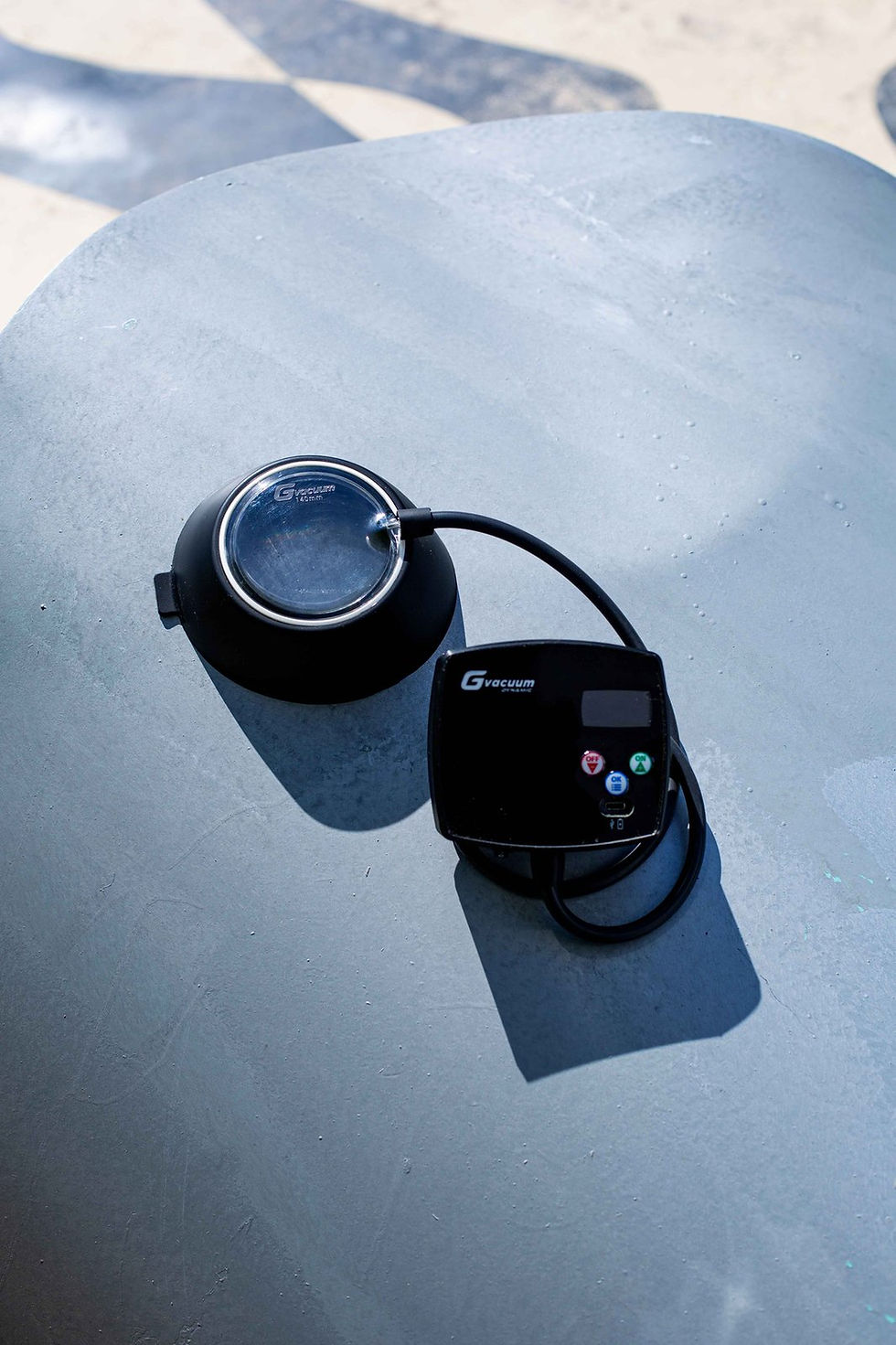
Pectuslab's own Gvacuum Dynamic Pro is being developed along these lines - built around Bluetooth connectivity, a companion mobile app, and a doctor portal designed to review session data such as pressure, duration, frequency, leakage, and temperature. It is important to be clear about where this stands: Dynamic Pro is currently in development and is not yet available for sale. It is mentioned here only to illustrate the direction connected monitoring technology is taking, not as a claim about outcomes or availability.
Frequently Asked Questions
Does Wearing a Monitoring Sensor Change How a Brace or Vacuum Bell Feels?
Generally, no - monitoring components are designed to sit alongside the device's normal function rather than change how pressure is applied. Any specific comfort question about a particular product is best discussed directly with the treating clinician.
Is This Kind of Data Only Useful for Research?
Both. The published studies referenced here come from research settings, but the same principle - that objective wear-time and pressure data support better-informed adjustments - applies directly to individual treatment. It is one of the reasons monitoring technology is moving from research tools toward everyday clinical use.
What Happens if Recorded Data Shows Lower Use Than Expected?
That is exactly the kind of finding monitoring is meant to surface early. It does not automatically mean a treatment has failed; it gives the clinician a concrete starting point for a conversation about what is making daily use difficult and what, if anything, should change in the plan.
Conclusion
Across scoliosis bracing, pectus carinatum bracing, and vacuum bell treatment for pectus excavatum, the published literature converges on the same general principle: outcomes are closely tied to how consistently a device is actually used, and that consistency is far easier to manage when it is measured rather than estimated [1][2][3][4][5].
This is the reasoning behind the broader shift toward connected monitoring technology in chest wall and orthopedic bracing - not a promise of a specific result, but a more reliable basis for the day-to-day decisions that, together, determine how any long-term brace or vacuum bell treatment actually goes.
Sources
Contact Us
Have questions? Talk to our team about pectus treatment products and the right solution for you.