What's the Link Between Chest Wall Shape and Back Pain?
People with a chest wall shape difference, and their families, often wonder whether they also have back discomfort or pain - and whether that pain is directly related to a chest wall deformity such as pectus carinatum or pectus excavatum, or comes from something entirely unrelated.
A review of current treatment approaches to pectus excavatum notes that the chest and back pain seen in some patients is generally musculoskeletal in origin, though the exact mechanism is still not fully understood [1]. The same review highlights that in severe pectus excavatum, a posture sometimes described in the literature as "pectus posture" can develop - shoulders rolling forward and the upper back curving forward - which can make the deformity more visually apparent while also placing extra load on the spine [1].
A study using imaging to examine this relationship found that adolescents with pectus excavatum and pectus carinatum had a greater chest-spine curvature angle (thoracic kyphosis) than healthy peers, along with more limited hip-sacral region mobility [2]. Another recent observational study reported that a notable share of adolescents evaluated for chest wall deformity showed a cluster of postural findings - forward head posture, rounded shoulders, increased thoracic kyphosis and scoliosis [3]. This article looks at this indirect but literature-documented relationship between chest wall shape and back pain, which mechanisms may be involved, and when it's worth seeing a specialist.
The Anatomical Connection Between the Chest Wall and the Spine
The chest wall is a closed structure formed together by the spine, the ribs, and the breastbone (sternum), and these three components are tightly linked to one another. When the sternum develops in an unusual position - forward in pectus carinatum, or inward in pectus excavatum (known colloquially as "shoemaker's chest") - the ribs and the thoracic spine attached to them have to adapt to that change in some way.
This adaptation largely happens at the level of muscles and posture. When the shape of the chest wall changes, the back and abdominal muscles that keep the trunk upright may shift into a different working pattern; some muscle groups become overstretched while others grow relatively weaker. Over time, this rebalancing can set the stage for back fatigue and pain - particularly with long periods spent sitting or standing in the same position.
The Concept of "Pectus Posture" and Its Link to Back Pain
There's a concept described in the literature as "pectus posture" [1]: in some people with severe pectus excavatum, a posture can develop where the shoulders roll forward and the upper back curves noticeably forward. This posture can make the sternal depression more visually apparent, and can also reduce the spine's natural support, creating extra load in the back.
This kind of postural adaptation doesn't, on its own, mean a new and separate structural deformity has appeared, but over time it can throw off the balance of the muscles and connective tissue around the spine. In fact, increased thoracic kyphosis - meaning the upper back curving forward more than normal - has been observed more often in adolescents with both pectus excavatum and pectus carinatum (known colloquially as "pigeon chest") than in healthy peers [2].
How Often Are These Postural Findings Seen?
A study of adolescents evaluated for chest wall deformity reported that forward head posture, rounded shoulders, increased thoracic kyphosis and scoliosis were frequently seen in this group, with some of these postural findings more pronounced in the pectus excavatum group and others in the pectus carinatum group [3]. This suggests the relationship between chest wall shape and spinal posture isn't an isolated observation, but a pattern seen repeatedly in clinical practice.
Another notable point from the same research group is that hip and sacral region mobility was also found to be more limited in both the pectus excavatum and pectus carinatum groups compared with healthy peers [2]. This suggests back pain may not be confined to the chest region alone, and could be part of a broader postural chain that also affects the lower trunk.
Why Spinal Position Sense Matters
The body's ability to sense and perceive its own posture is called position sense, or proprioception. In an assessment of adolescents with chest wall deformity, more errors were observed in relocating spinal position compared with healthy peers [2]. This means the posture a person feels as "normal" or comfortable may, in fact, not be an ideal position for spinal health.
In daily life, this can show up as follows: a person may feel their posture is correct or habitual, while that posture is actually keeping certain back muscles under constant tension. Over time, this kind of load can contribute to muscle fatigue and pain complaints - which is one reason postural awareness and physical therapy approaches come up for some patients.
Is Chest Wall Shape the Only Cause of Back Pain?
Automatically attributing back pain in someone with a chest wall deformity to the deformity itself is not the right approach. Rapid growth during adolescence, long hours in front of screens, backpack habits, general muscle weakness, and a sedentary lifestyle are all common causes of back pain that are independent of the deformity.
This is why, in someone who has back pain and also has a chest wall shape difference, the exact source of the pain can only be determined through a thorough examination. In some cases the pain is related to postural adaptation, and in others it may stem from an entirely unrelated cause; making this distinction matters for determining the right approach.
What to Pay Attention to in Daily Life
The final treatment decision should always be made together with a specialist, but general postural hygiene is a well-known approach that supports back health. Avoiding long periods in the same position, keeping screens close to eye level, distributing backpack weight evenly across both shoulders, and taking regular short breaks to change position throughout the day can all help reduce single-point loading on the back muscles.
Movement programs designed under specialist supervision, aimed at supporting general muscle strength and flexibility, may help reduce discomfort in some patients; but the content of such programs varies depending on the person's age, the type of deformity, and any accompanying findings. Rather than starting an intensive exercise program on your own without guidance, it's safer to first go through an assessment and shape the recommended approach around it.
What Can Be Done, and When to See a Specialist
If back pain becomes persistent, affects daily activities, keeps increasing over time, or becomes more pronounced alongside the chest wall shape difference, seeing a specialist directly is a meaningful step. Which specialty is appropriate depends on the findings; a thoracic surgeon, an orthopedic specialist, a pediatric surgeon, or a physical medicine and rehabilitation specialist can all play a role in this assessment.
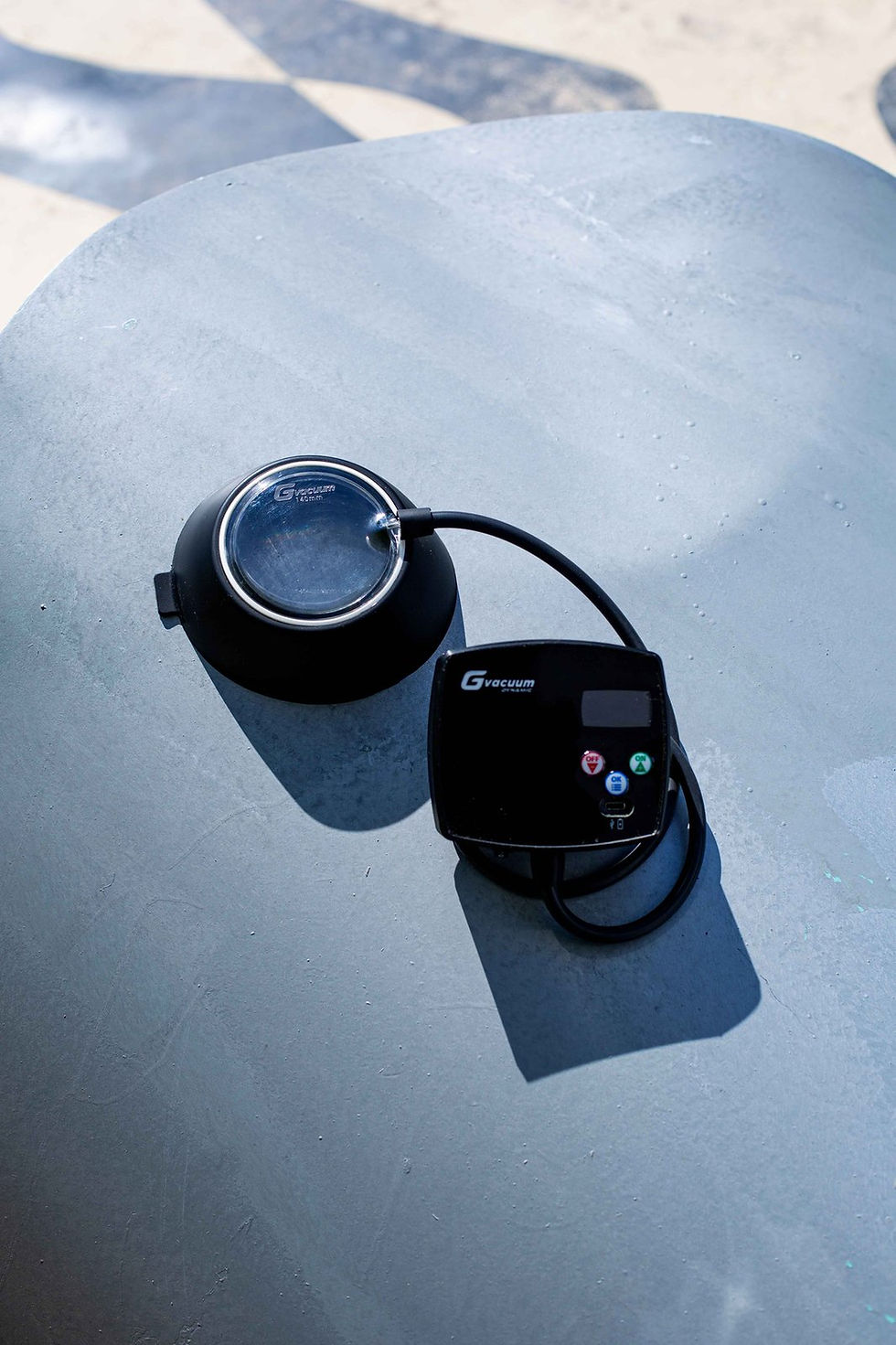
At Pectuslab, we offer general information and referral support around chest wall deformities; the exact cause of back pain and the treatment approach are always determined by the examining specialist. If an assessment leads to a diagnosis of pectus carinatum or pectus excavatum, non-surgical support options such as the Gpad pectus carinatum brace or the Gvacuum vacuum bell may come up in discussion with a specialist; it's worth noting this isn't a claim of guaranteed pain relief or a shorter treatment timeline - the approach is always shaped around individual findings.
Frequently Asked Questions
Does pectus excavatum or carinatum always cause back pain?
No. Many people go through life without any back pain at all. However, postural adaptations seen in some patients - such as forward-rolled shoulders or increased thoracic kyphosis - can place extra load on the back muscles over time; this relationship varies from person to person.
Do posture exercises help with back pain?
Physical therapy and postural-awareness work can help reduce discomfort in some patients, but this doesn't mean the deformity itself is eliminated or that a specific outcome is guaranteed. The right exercise approach should be determined individually by the examining specialist.
Is my back pain related to my chest shape, or does it come from something else?
It's hard to determine this on your own with certainty; many factors - growth phase, postural habits, and muscle balance - can contribute to back pain. A definitive distinction is made through examination and, if needed, imaging.
Closing
The relationship between chest wall shape and back pain isn't a simple, one-way cause-and-effect link; it's a multi-factor pattern involving posture, muscle balance, and spinal mobility. While the literature reports increased thoracic kyphosis, forward-leaning posture, and differences in spinal position sense in people with pectus excavatum and carinatum, automatically attributing every case of back pain to chest wall shape isn't accurate. For persistent or worsening back pain, the right step is a thorough evaluation with a specialist rather than waiting it out.
Sources
Contact Us
Have questions? Talk to our team about pectus treatment products and the right solution for you.