Pectus and Scoliosis Screening in Teens: When Should Families See a Doctor?
The adolescent growth spurt is the period when both chest wall deformities and spinal curvatures become most noticeable — and therefore easiest to spot. The US Preventive Services Task Force (USPSTF) reviewed the current evidence on screening for adolescent idiopathic scoliosis and noted that school-based screening is still practiced within different healthcare systems [1]. This article looks at how families — whether or not they already have a pectus deformity (carinatum or excavatum) being followed — can notice changes in both the chest wall and the spine at home during the growth years, and when it's time to see a specialist.
We've previously covered on our site how often pectus and scoliosis occur together, and how a mild accompanying scoliosis is monitored in a patient already being treated for pectus. This article takes a step back to focus on screening and early recognition — the period before any diagnosis has been made: what can families notice at home or at school, and which findings go beyond a “wait and see” approach and call for a specialist visit?
This article does not share any patient-specific diagnosis, severity rating, or treatment recommendation; the information here is based on published scientific literature and general clinical practice [1] [2] [3] [4]. A definitive assessment and diagnosis can only be made by a qualified specialist after a physical examination.
Why Is the Adolescent Growth Spurt So Critical?
Adolescent idiopathic scoliosis typically appears with the onset of the growth spurt, or an existing mild curve becomes more noticeable during this time — which is why roughly ages 10-14 are considered especially critical for noticing spinal curvatures [2]. Because the cartilage and bone structures of the rib cage are also rapidly reshaping during this same growth period, a pectus deformity that went unnoticed before, or was mild, can also become more visible now [4].
This overlap is not a coincidence. The breastbone (sternum), rib cartilage, and spine develop as a connected skeletal unit during growth. So a change noticed in one area during the growth spurt can be a natural prompt for families and doctors to also check the other area — though this doesn't mean every chest wall finding is necessarily linked to a spine problem.
What Can Families Notice at Home?
On the scoliosis side, findings families might notice include shoulders that sit at uneven heights, one shoulder blade appearing more prominent than the other, an uneven waistline crease, a visible asymmetry at hip level, and one side of the back appearing higher than the other when bending forward. This last finding is based on the “forward bend test,” a simple observation method widely used in school screenings [1] [2].
On the pectus side, the most commonly noticed findings include the breastbone protruding outward (pectus carinatum) or sinking inward (pectus excavatum, sometimes called “shoemaker's chest”), one side of the rib cage appearing more prominent than the other, and an outward flare at the lower ribs (rib flare). These are often first noticed while changing clothes, swimming, or in photos.
It's important to stress that none of these findings on its own amounts to a diagnosis. The goal here isn't to cause unnecessary worry, but to remind families that these kinds of changes during the growth years are worth monitoring, and that consulting a specialist without delay is the right step once something is noticed.
How Is Screening Done at School and in Routine Checkups?
Different countries and institutions recommend different age ranges for scoliosis screening: some sources suggest annual screening for all children aged 10-14, others recommend screening girls at ages 11 and 13 and boys at 13-14, while some pediatric sources point to routine checks at ages 10, 12, 14, and 16 [2]. This variation shows that there isn't one universal protocol, but rather practices that differ from country to country and health system to health system.
In many places, this kind of screening isn't standard in every school; because of this, family awareness can play an even more decisive role in early detection than the school system does. Finding a clear asymmetry in the back during the forward bend test is generally considered the threshold for referral to a more detailed evaluation — imaging, if needed [1]. That said, doing this test at home is not a diagnostic tool; it's simply an observation that helps decide whether “this is something we should discuss with a specialist.”
Why Should Pectus and Scoliosis Be Assessed Together?
The literature reports that adolescent idiopathic scoliosis occurs more often in patients with a pectus deformity than in the general population; a systematic review pooling multiple studies reports this co-occurrence at double-digit rates [3]. This doesn't mean every pectus patient will necessarily develop scoliosis — it's a statistical association showing that both conditions can be partly influenced by the same growth process and skeletal development.
For this reason, reviewing the spine in a teenager being followed for a pectus deformity — and, similarly, assessing the chest wall in a patient being followed for scoliosis — is a general approach recommended in the literature [3]. The point of this approach is to make early detection easier, not to unnecessarily merge two otherwise independent follow-up processes; each condition continues to be evaluated on its own clinical course.
Which Specialist Should You See, and When?
One of the most common questions families ask is which specialist to see once this kind of finding is noticed. Rather than pointing to a single specialty, it's more accurate to say: you should see a specialist directly — depending on the nature of the finding, this could be a thoracic/chest surgeon, a pediatric surgeon, an orthopedic specialist, or a physical medicine and rehabilitation specialist. Which specialty is the right first step depends on the type of finding, and is usually guided by a family doctor or pediatrician's referral.
As a general framework, it's worth not delaying an evaluation in these situations: a newly noticed asymmetry in the chest wall or spine that increases over time, a difference in shoulder or hip height that becomes visible in clothing or swimwear, a clear back prominence noticed during forward bending, or a family history of scoliosis or a pronounced pectus deformity. These aren't a definitive diagnostic checklist — think of them as signals that “it may be time to have this conversation with a specialist.”
What Happens After the Evaluation?
An initial evaluation by a specialist generally includes a detailed physical exam, imaging if deemed necessary (such as an X-ray), and an assessment of the patient's growth and skeletal maturity. For scoliosis, the degree of curvature (Cobb angle) and remaining growth potential are among the key factors considered when deciding on follow-up frequency and possible treatment options.
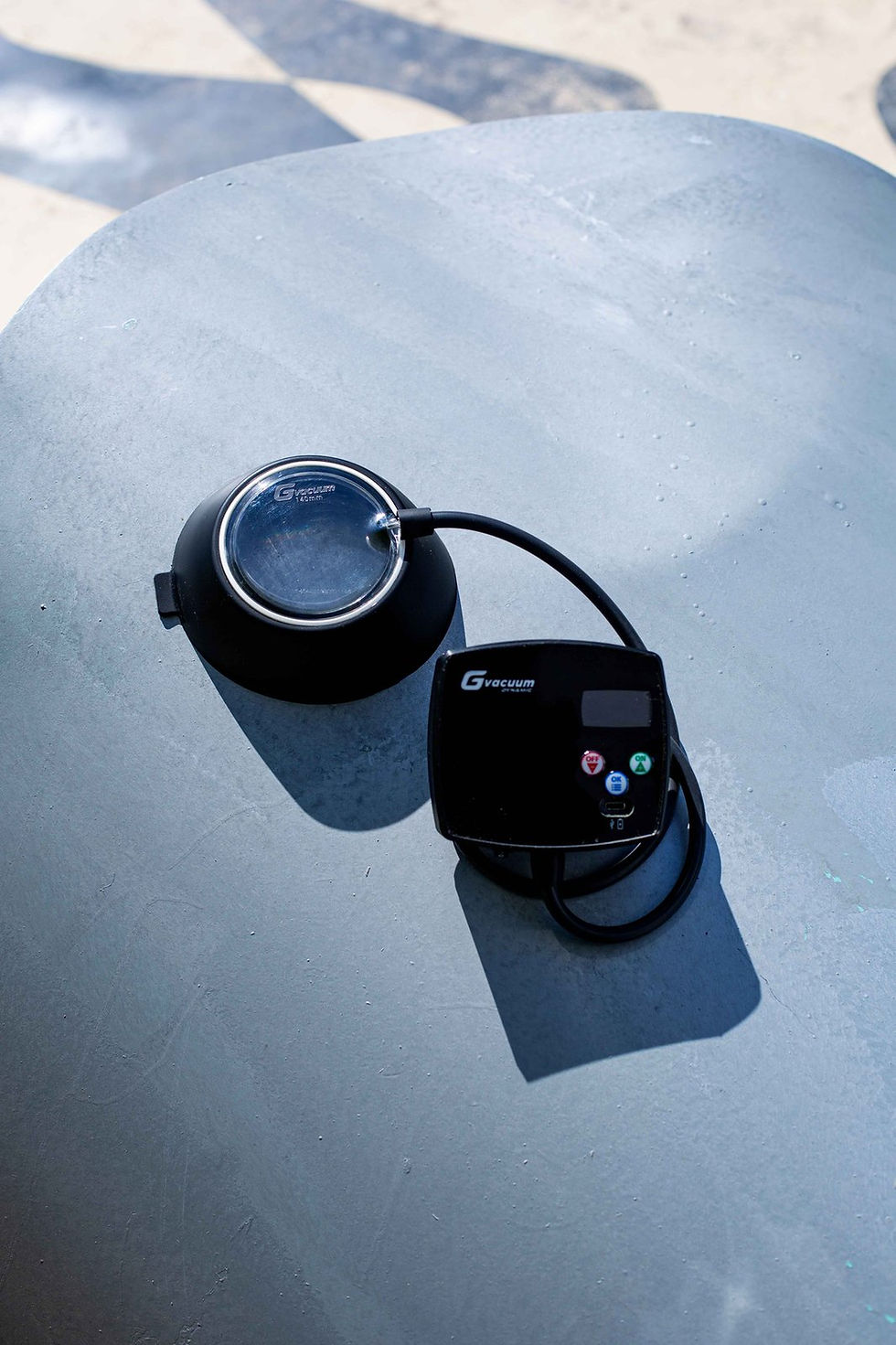
On the pectus side, the type and severity of the deformity, along with the patient's growth stage, play a role in determining whether a conservative — non-surgical — approach or closer monitoring is more appropriate. Pectuslab's Gvacuum vacuum bell and Gpad brace product line are among the conservative options that may be considered in suitable cases; however, only the examining specialist can decide which approach fits which patient — no success rate or guaranteed outcome is claimed here.
A Separate Resource for Spinal Concerns
When a brace is needed for spinal curvatures, Pectuslab has a separate, dedicated product line for this area: the Yuxel scoliosis, kyphosis, and lumbar brace family. These products are offered as a separate brand through skolyozorteztedavisi.com; if a brace need comes up after a spinal evaluation, detailed information on this topic can be found there. This is a completely separate product family from Pectuslab's own chest wall deformity line (Gvacuum, Gpad), aimed at a different group of patients.
Frequently Asked Questions
What should families do if scoliosis screening isn't done at school?
School screening may not be a standard practice in every region or every school. In this case, it's reasonable for families to occasionally check their child's back and chest wall appearance — especially during the adolescent growth spurt — and to consult a pediatrician or a relevant specialist directly if they notice anything suspicious.
Does a mild asymmetry always mean scoliosis or a pectus deformity?
No. Mild differences in body symmetry can also be common in healthy individuals. Whether a finding is clinically significant depends on its degree and how it changes over time, and this can only be determined by a specialist examination; observation at home alone doesn't constitute a diagnosis.
Should the spine also be checked regularly in a child being followed for pectus?
This is a general approach recommended in the literature [3]; however, the frequency and scope of checkups are determined by the treating specialist based on the patient's own clinical situation. It doesn't mean every pectus patient routinely needs advanced spinal imaging.
Is the risk higher if there's a family history?
A family history of scoliosis or a pronounced chest wall deformity can be a reason for increased awareness, but on its own it isn't a diagnosis or a definitive risk indicator. In children with a family history, slightly closer observation during the growth years can make the decision to consult a specialist easier.
Conclusion
Adolescence is the period when both the chest wall and the spine reshape the fastest — and so it's when changes are easiest to notice. The most practical path to early detection is for families to observe carefully but without anxiety during this time, and to see a specialist without delay once a suspicious finding appears.
At Pectuslab, our goal is to give families accurate, unassuming information about both chest wall deformities and any accompanying spinal findings, and to point them to the right specialist when needed; the final diagnosis and treatment decision always rests with the examining physician.
Sources
Contact Us
Have questions? Talk to our team about pectus treatment products and the right solution for you.