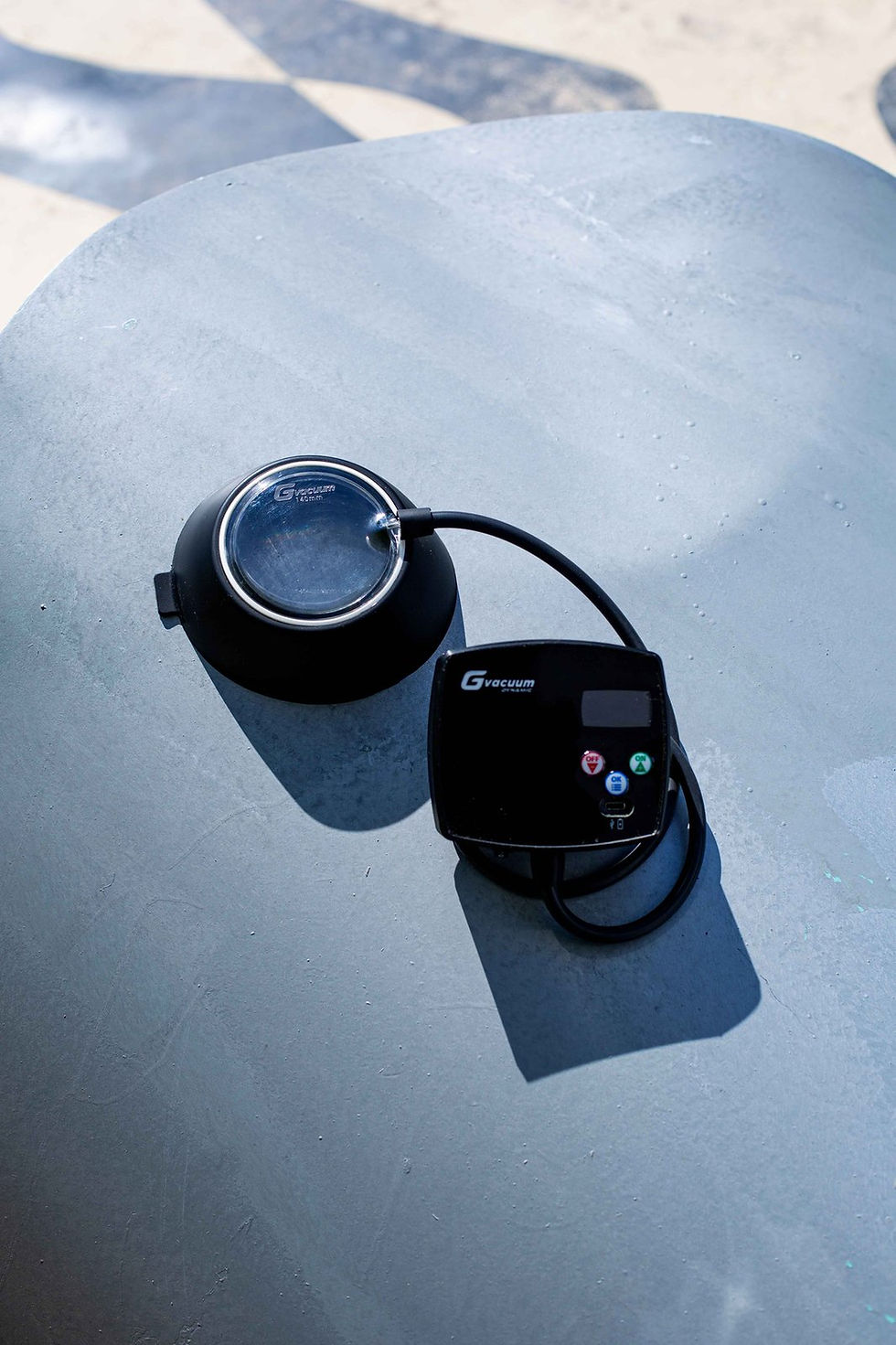
Gvacuum Dynamic Lite: How 10-Step Pressure Control and Target-Pressure Maintenance Make Daily Vacuum Bell Use Easier
Vacuum bell therapy offers a non-surgical option for pectus excavatum (sometimes called sunken or funnel chest), applying controlled negative pressure to the chest wall so the rib cage can gradually be drawn outward over months. [1][2] Like most non-surgical chest wall treatments, it follows a pressure and duration plan set by the treating clinician, worn daily over an extended period.
In a treatment that runs this long, how the device actually feels to use day after day becomes just as relevant as its core mechanism. If getting the pressure to the right level - and keeping it there - requires repeated manual effort during every single session, that adds up to a real daily burden. Published research on vacuum bell and orthopedic brace therapies consistently points to one thing: outcomes depend heavily on whether patients actually stick to the recommended wear schedule. [3]
With manual-pump vacuum bell models, reaching and holding the target pressure is up to the user - pumping and checking, repeated throughout the session. Gvacuum Dynamic Lite is an electronic control unit built specifically to change that day-to-day experience.
Why Ease of Daily Use Is a Treatment Variable, Not Just a Comfort Detail
A recurring finding across vacuum bell and orthopedic bracing literature is that adherence - simply wearing the device for the recommended hours and schedule - is one of the strongest predictors of outcome. [1][3] This isn't a claim tied to any particular brand; it's a broadly recognized principle.
That principle shifts daily-use experience from a secondary comfort question into something directly tied to treatment. Repetitive, attention-demanding manual steps at every session - particularly for younger patients - can chip away at motivation, and with it, consistency.
What Gvacuum Dynamic Lite Is
Gvacuum Dynamic Lite is an electronic control unit that connects to the part of the vacuum bell made of medical-grade silicone. It uses a simple three-button interface - plus, minus, and menu - along with a Quick Start feature designed to get a session going without extra steps.
10-Step Pressure Control and Target-Pressure Maintenance
The unit offers ten pressure steps, allowing the clinician's pressure plan to be applied in defined, gradual increments. Its target-pressure maintenance feature is built to hold that set pressure steady for the duration of the session - so the user isn't repeatedly re-pumping by hand partway through.
This connects directly to a theme we've covered before: keeping pressure consistent at the planned level is an engineering goal that matters for how predictable a treatment feels day to day. To be clear, this describes the device's engineering approach - it is not a claim about success rates or outcomes, which would require scientific and regulatory review before being stated publicly.
2-Hour Automatic Program: Hands-Free Use
Dynamic Lite also offers a 2-hour automatic program. Over a 2-hour countdown, it steps the pressure through predefined levels, managing the session on its own. The aim is a hands-free experience, without the user needing to keep manually interacting with the device throughout the session.
The duration and pressure steps of this automatic program follow the treatment plan set by the treating clinician; it is not a claim of a shorter treatment or a guaranteed outcome - the goal is simply to reduce the need for continuous manual adjustment during daily use.
Live Pressure and Time Display, Vacuum Bell Presets
The display shows live pressure and elapsed session time, so the patient or family can see exactly what's happening rather than guessing. A presets feature (cup presets) remembers preferred settings, cutting down on the need to reconfigure everything from scratch at the start of each session.
How This Differs From the Manual Model
The Gvacuum manual vacuum bell remains a fully valid, currently sold option - well suited to patients or families who prefer a simpler mechanical design, or who are comfortable manually pumping and checking pressure themselves. Dynamic Lite applies the same underlying vacuum bell principle but automates the repetitive daily steps. (Gvacuum Dynamic Pro, which adds Bluetooth connectivity, a mobile app, and a doctor portal, is a separate, more advanced product still in development - not yet on sale, and not to be confused with Dynamic Lite.)
It's worth being direct here: neither the 10-step pressure control nor target-pressure maintenance comes with any promise of a shorter treatment or a better outcome - that kind of claim would need scientific and regulatory review before it could be made public. The pressure level and session duration are always set by the treating clinician; the device is a tool for carrying out that plan more easily, not a substitute for it.
Manual or Digital: What Should Guide the Choice
The choice between the manual and digital models usually comes down to factors like the patient's age, daily routine, and comfort with a bit more technology - best discussed with the treating clinician. Whichever model is chosen, the principle the literature keeps pointing back to stays the same: consistency in daily use. [1][3]
Frequently Asked Questions
Does Dynamic Lite adjust pressure on its own?
No. The pressure level is set through the 10-step control according to the clinician's plan; target-pressure maintenance simply helps hold that set value steady during the session.
Should I choose Dynamic Lite or the manual model?
That's a decision to make with the treating clinician, based on the patient's age, daily routine, and clinical picture. Both models rely on the same core vacuum bell treatment principle.
Does the live pressure and time display mean the treatment is guaranteed to work?
No - it's a monitoring aid, not a guarantee of outcome. Progress depends on the pressure plan, consistent daily use, and the clinician's ongoing follow-up.
How does Dynamic Lite's 2-hour automatic program work?
It manages the session over a 2-hour countdown, stepping the pressure through predefined levels - aimed at hands-free use without continuous manual adjustment. The duration and pressure steps follow the treatment plan set by the treating clinician; it does not mean a shorter treatment or a guaranteed outcome.
Conclusion
In developing Gvacuum Dynamic Lite, the long, repetitive nature of vacuum bell therapy was treated as a design problem in its own right - not just a footnote to the device's core function.
In the end, features like 10-step pressure control, target-pressure maintenance, and the live display don't change the fundamental treatment principle - they're aimed at making the daily experience of it easier. What actually determines outcome remains the clinician's plan and how consistently it's followed; the device is a tool built to make that consistency easier to maintain.
Sources
[2] Obermeyer RJ. Incorporating vacuum bell therapy into pectus excavatum treatment. J Vis Surg. 2016.
Contact Us
Have questions? Talk to our team about pectus treatment products and the right solution for you.