Does Vacuum Bell Size Matter for Pectus Excavatum Treatment?
Pectus excavatum is a structural chest wall condition in which the breastbone and rib cartilage sink inward, sometimes referred to informally as a sunken or "funnel" chest. One non-surgical approach, vacuum bell therapy, applies controlled negative pressure to the sunken area of the chest wall so the cartilage can gradually remodel outward over months [1][2].
This is not a one-time fix but a daily, long-term process. How well the vacuum bell's dome fits the chest wall - its size - directly affects how predictable that process is. This article looks at why a single "standard" size isn't enough, and how offering seven anatomical sizes relates to the mechanics of the treatment.
What follows describes general engineering and clinical principles, not a success-rate or guarantee claim - any such claim would first need to pass scientific, legal, and regulatory review before being made public.
Why Dome Fit Is a Clinical Variable, Not a Detail
A vacuum bell's working principle looks simple: create a negative-pressure space under the dome. But for that pressure to be effective, the rim of the dome has to sit against the chest wall evenly, without gaps. When a dome is too large or too small for a person's chest width, air can leak in at the edges, and the pressure actually delivered becomes unpredictable.
That makes dome size a clinical variable, not a cosmetic one - it determines whether the physical mechanism of the treatment can work as intended. A poorly matched dome can mean weaker, less consistent suction, or unwanted pressure concentrated on specific points of the chest wall.
What "Seven Anatomical Sizes" Actually Means
Chest width, and the depth, location, and shape of the deformity itself vary considerably from patient to patient - especially across the span from childhood into adolescence. A single dome size simply cannot fit that range of anatomy well.
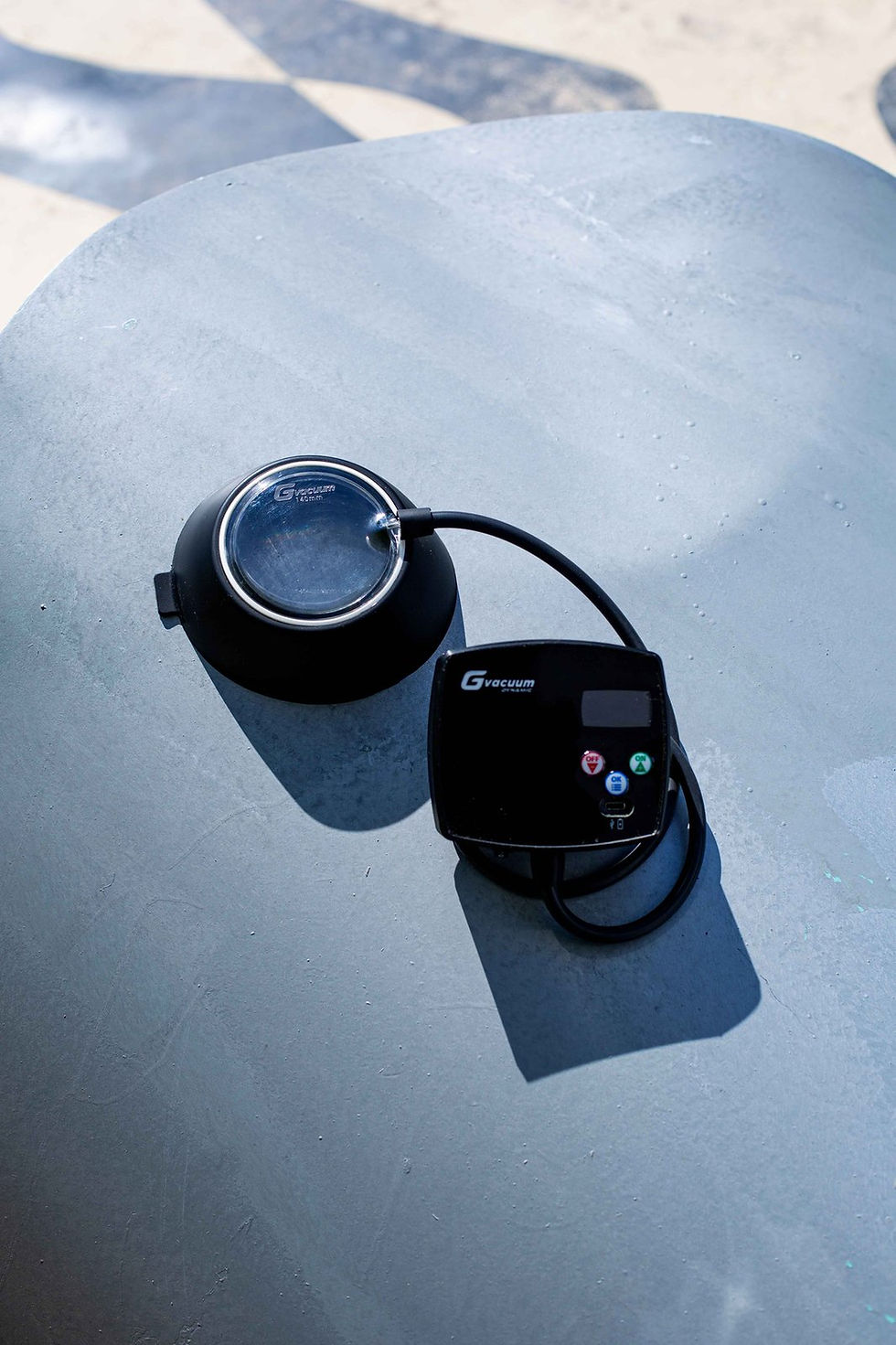
The Gvacuum Vacuum Bell is offered in seven distinct anatomical sizes to address that variation. Which size is used is determined under a physician's guidance, based on the width, length, location, and shape of the deformity - a clinical decision, not a cosmetic preference.
How Fit Affects Seal and Pressure Consistency
A correctly sized dome works together with features like the airlock and angled inlet to help maintain a consistent, leak-free pressure zone. A reinforced hose and a sturdier pump support keeping that pressure stable throughout a session.
When the dome doesn't sit flush against the chest, some of the pressure generated during pumping is lost through the gap - weakening the effect both patient and clinician expect, and making it harder to tell whether the treatment is progressing as planned.
The Risks of an Ill-Fitting Dome
A dome that's too large tends to leak at the rim and sit loosely, making pressure inconsistent. A dome that's too small can concentrate pressure on a narrow area of the chest wall, which may cause skin irritation or discomfort.
This kind of mismatch usually shows up as reduced daily wear time, since an uncomfortable device is harder to use for the recommended duration - and daily wear time is one of the most fundamental drivers of outcome in device-based orthopedic treatments [3][4].
Fit, Comfort, and Treatment Compliance
Published research on vacuum bell therapy consistently points to compliance - using the device for the recommended duration and schedule - as one of the strongest predictors of outcome [3][4]. Compliance, in turn, is closely tied to how comfortable the device is day to day.
A well-fitted dome that holds its pressure makes it easier for a patient to reach their daily wear goal. An uncomfortable or leak-prone dome can undermine motivation - and, with it, compliance.
Growing Patients: Why Fit Needs Rechecking Over Time
Chest wall dimensions can change over time, particularly through puberty, so the size chosen at the start of treatment may need to be reassessed months later [5]. Keeping dome fit under regular review is part of keeping the treatment's progress predictable.
Gvacuum's Engineering Approach
The Gvacuum Vacuum Bell is built from high-quality, food-grade silicone and offered in seven anatomical sizes. Features such as the airlock, angled inlet, reinforced hose, and a thicker, more durable pump are designed to work alongside the chosen size to support a consistent pressure experience.
The dome sits directly against bare skin for many hours a day, so material choice isn't only a pressure-engineering question - it's also a skin-safety one. Using a silicone that meets food-contact-grade standards, suited to prolonged and repeated skin contact, matters for that reason.
The box includes a spare pump, spare hose, a carrying case, and a wooden depth ruler for tracking progress, and the device carries a two-year warranty. It's worth being clear: this describes the product's engineering approach, not a success-rate or guarantee claim - such claims would require scientific and regulatory review first.
What to Ask When Choosing a Vacuum Bell
Useful questions when evaluating a vacuum bell include: does the dome match the width and location of the deformity; is size selected under a physician's guidance; is there any noticeable leaking at the edges; and does the product come with spare parts and clinical follow-up support.
It's also worth asking whether the physician recommending the product has prior treatment experience with that specific product in other patients; a clinician's familiarity with how a given product behaves over time supports safer follow-up, which matters both for skin health and for the reliability of the treatment.
Frequently Asked Questions
How is the right vacuum bell size chosen?
Size is selected by a physician based on an examination of the deformity's width, depth, location, and shape - it's a clinical decision based on assessment, not a guess made at home.
Can the size need to change during treatment?
Yes. Chest anatomy can change over time, especially in growing patients, so dome fit is typically reassessed at follow-up visits as part of the normal treatment protocol.
Does the right size speed up treatment?
No direct guarantee of a faster outcome can be made - that kind of claim would need scientific and regulatory review first. What a well-fitted, leak-free dome can do is make it easier to stick to the recommended wear schedule, which supports predictable progress.
Is a fitting appointment needed before starting treatment?
Usually, yes. The treating clinician checks the initial fit - seal and comfort - before regular use begins. That check is a normal part of starting any vacuum bell treatment plan, not an optional extra step.
Conclusion
In vacuum bell therapy, dome size is not a secondary detail - it's a clinical variable that directly affects whether the treatment mechanism can work consistently. Seven anatomical sizes exist so that this choice can be made under physician guidance, matched to each patient's own anatomy.
That principle guided the design of the Gvacuum Vacuum Bell, offered with a range of sizes and supporting components meant to fit alongside clinical follow-up. For patients and families, the core message is this: choosing the right vacuum bell size isn't just a purchasing detail - it's a clinical step that affects how reliably the treatment can work.
Sources
[1] Obermeyer RJ. Incorporating vacuum bell therapy into pectus excavatum treatment. J Vis Surg. 2016.
Contact Us
Have questions? Talk to our team about pectus treatment products and the right solution for you.