Digital Tracking and the Future of Vacuum Bell Therapy for Pectus Excavatum
Pectus excavatum is a structural chest wall condition in which the sternum sinks inward. Among non-surgical approaches, vacuum bell therapy works by applying controlled negative pressure to lift the chest wall forward, in regular sessions over many months, so the tissue can gradually remodel. As with orthopedic treatments in general, the outcome is closely tied to how consistently the patient carries out the routine. [4][5]
The real challenge is that this therapy happens at home and is largely self-directed. Unlike a one-time procedure in a clinic, daily vacuum sessions depend on the patient's discipline: how often, how long, and at what pressure. When those quantities live only in memory, it becomes hard for doctor and patient alike to know whether treatment is progressing as planned.
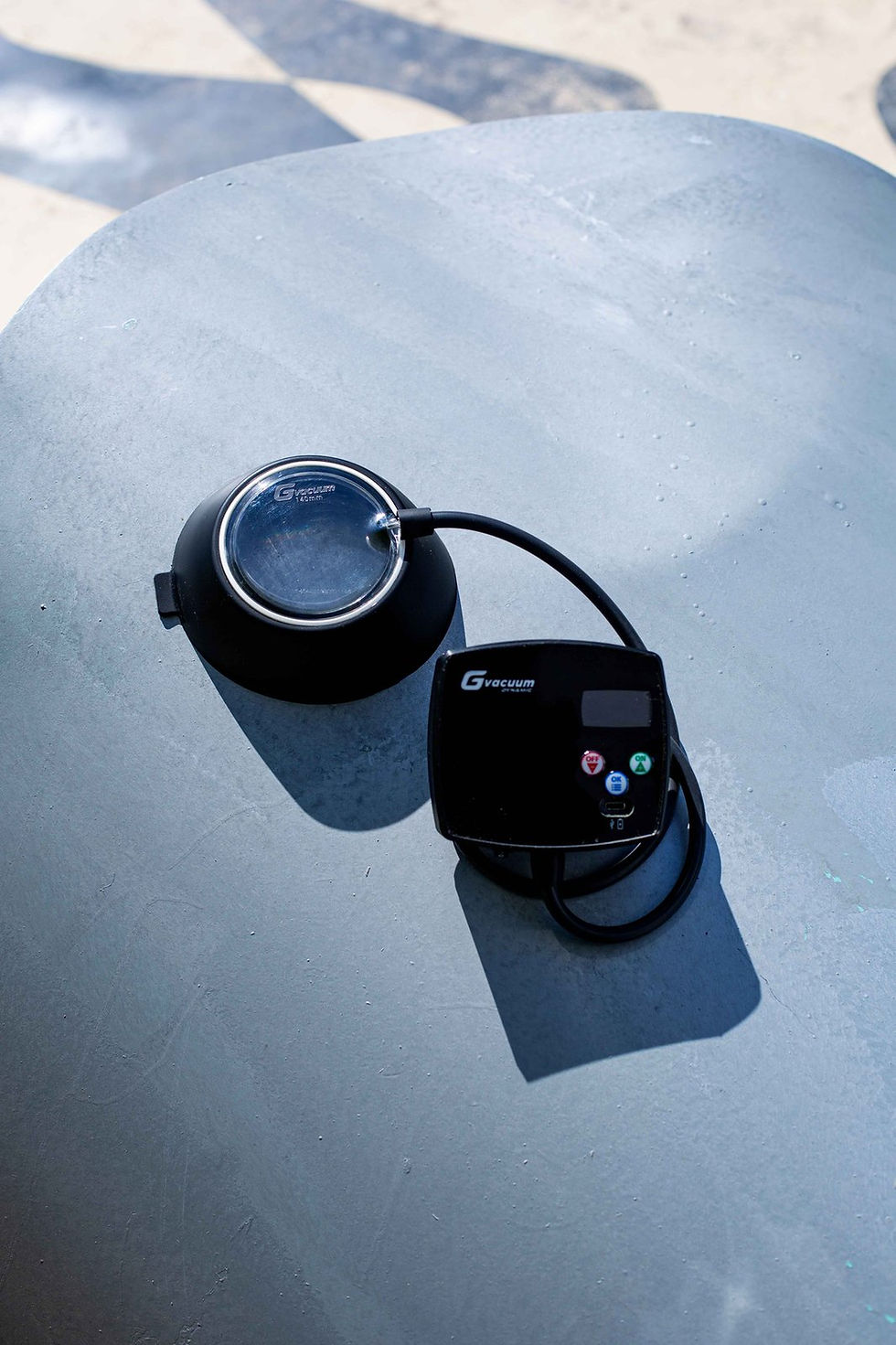
This article looks ahead. The Gvacuum Dynamic Pro is still in development and is not yet on sale; it is being designed to turn each session into readable data over a BLE connection and a mobile app. Here we look forward at how that kind of tracking could support patient compliance once such tools become available - without any claim about success rates or guarantees. Its manual and lite models — the Gvacuum Vakum Bel Manuel and the Gvacuum Dynamic Lite Vakum Bel — are available now, and you can reach out to us to get one.
Why daily consistency is the hidden variable in vacuum bell treatment
Compliance is the quiet variable that often gets overlooked. In orthopedic literature generally, it is a well-established principle that outcomes depend heavily on whether the device is used for the recommended hours and schedule. This is not a brand-specific claim; it is a widely recognized principle across orthopedic bracing and device therapy. [1][2][3]
But compliance is hard to measure when treatment happens away from the care team. A patient may believe in good faith that they completed their sessions, while the actual duration was shorter or the pressure lower than the target. That gap between plan and practice is exactly what can turn a follow-up visit into guesswork - and it is precisely the gap a future digital-tracking approach is meant to close.
What treatment tracking is designed to record
The idea of digital tracking is to turn each session into data instead of relying on memory. The Gvacuum Dynamic Pro is being designed to capture several parameters per session: the applied pressure, the duration of the session, the frequency of use, the leakage at the bell's seal, and the temperature. Each of these numbers would tell a different part of the story.
Pressure and duration would show whether a session reached the target the doctor set, while frequency would reveal how consistent use was across the week. Leakage points to a seal problem between the bell and the skin that can quietly reduce a session's effectiveness, and the temperature reading helps put the session in context. Together, these parameters are intended to turn a vague impression into a clear, discussable picture.
How BLE and a mobile app could change the daily experience
The Gvacuum Dynamic Pro is designed to connect over BLE to a mobile app, so a patient could see the session in real time rather than estimating it. That kind of immediate clarity would have a psychological effect: when you can watch your own progress on screen, the daily goal becomes tangible instead of an abstract recommendation.
Reminders and session charts are also meant to help cement the habit. A gentle prompt at the right time could reduce forgotten sessions, and a chart that accumulates across the days would give a sense of accomplishment that supports continuity - especially for children and adolescents, whose motivation can fade quickly.
Photo uploads and short surveys are planned to add another layer: the shape of the chest could be documented over time, and brief questions about comfort or any skin irritation could be answered. These inputs would not replace a clinical examination, but they could enrich the conversation between patient and doctor.
The doctor portal: turning home sessions into shared information
Sessions are intended to upload to a server and appear in a portal designed for the doctor. This way the months between visits would not be a black box but a record the doctor could review to understand how the therapy actually went at home.
This shared view is meant to support better-informed check-ins. Instead of relying on the patient's memory of past weeks, the doctor could look at the real trends in pressure, duration, and frequency, and adjust the plan when needed. The clinical decision would always stay with the doctor, though; the data is a tool that supports clinical judgment, not a replacement for it.
What data-supported tracking can and cannot promise
It is important to be precise here. Even accurate tracking would not mean a guarantee of a faster or better outcome; any such claim would first need to pass scientific and regulatory review before it could be made public. What we describe here is an engineering and functional look at a device still in development, not a promise of a success rate and not the announcement of a product you can buy.
What tracking could realistically do in the future is support compliance: make the daily goal visible, reduce forgotten sessions, surface seal problems early, and give the doctor a clearer picture. Because compliance is one of the most important pillars of orthopedic treatment, any tool that makes it easier could support a more consistent and predictable treatment course once it is available.
Frequently Asked Questions
Will the app work without internet during a session?
Under the current design, the connection between the device and the phone relies on BLE, a short-range link that does not need internet during the session itself. Uploading the session to the server and having it appear in the doctor portal would require a network connection later. The final details will be confirmed at launch.
Will my doctor be able to see my sessions remotely?
That is the intended design: if the sessions are uploaded to the server, the doctor portal is meant to let the doctor view the recorded parameters. The scope and timing of that follow-up would be something you arrange with your doctor in the future.
Will tracking replace clinical follow-up?
No. The data is designed to complement the clinical examination, not to replace it. Decisions about pressure, duration, and any adjustment would remain a medical decision the doctor makes in light of your condition.
Conclusion
In vacuum bell treatment for pectus excavatum, tracking sessions looks less like a technical luxury and more like a practical lever for compliance. When what happens at home becomes visible, measurable, and shareable, the patient gets closer to the daily goal and the doctor gains a firmer basis for decisions.
The Gvacuum Dynamic Pro is being developed from this principle: turning the home session into shared information that supports the consistency of treatment. The device is not yet on sale, and this article is a look ahead at what digital tracking could offer. The core message is this: tracking is a tool in the service of compliance - and compliance is what makes the treatment course more predictable.
Sources
[5] Obermeyer RJ. Incorporating vacuum bell therapy into pectus excavatum treatment. J Vis Surg. 2016.
Contact Us
Have questions? Talk to our team about pectus treatment products and the right solution for you.