How Pressure Consistency and Daily Wear Time Affect Vacuum Bell Treatment Outcomes
Vacuum bell therapy is a non-surgical treatment option for pectus excavatum (sunken chest) that works by applying negative pressure to the chest wall to gradually encourage correction over time. First described back in 1910, the technique has seen significant clinical adoption over the past fifteen years [1].
Treatment effectiveness depends on multiple variables rather than any single factor - but one finding has become increasingly prominent in the literature in recent years: adherence to daily wear time (compliance) is identified as one of the most decisive factors in outcome.
This article draws on independent, published external literature rather than Pectuslab's own clinical data - the goal is to summarize general scientific findings about vacuum bell therapy and consider what they mean for device design.
What Does the Literature Say: Is Compliance Really Key?
A 2025 study investigating factors that optimize the efficacy of vacuum bell therapy used the title "Compliance is Key" directly [2]. The study found that how consistently a patient adhered to their daily wear schedule was one of the most decisive variables in treatment outcome.
Similarly, another study of patients undergoing vacuum bell treatment during puberty reported that around 6 hours of daily use improved treatment effectiveness [3]. This finding points to the importance of a predictable, sustainable daily routine rather than short, inconsistent use.
Why Pressure Consistency Matters
The mechanism of vacuum bell therapy relies on applying a specific negative pressure to the chest wall over a sustained period. Keeping that pressure consistent within the intended range directly affects both comfort and the treatment's expected effect - pressure that's too low may be ineffective, while pressure that's too high or uncontrolled can cause discomfort and shorten actual wear time.
A large 2022 cohort study examining factors associated with success in vacuum bell treatment found that consistent, regular use was an important determinant alongside other variables such as chest wall flexibility and age [4]. The general mechanism and clinical application of the therapy are covered in detail in a comprehensive 2016 review [5].
This is not a one-time procedure but a process that can span months or even years; because of that, keeping pressure stable over time is, much like in other orthopedic brace treatments, an engineering concern that directly affects how reliable the treatment can be.
The Gvacuum Family's Approach to These Findings
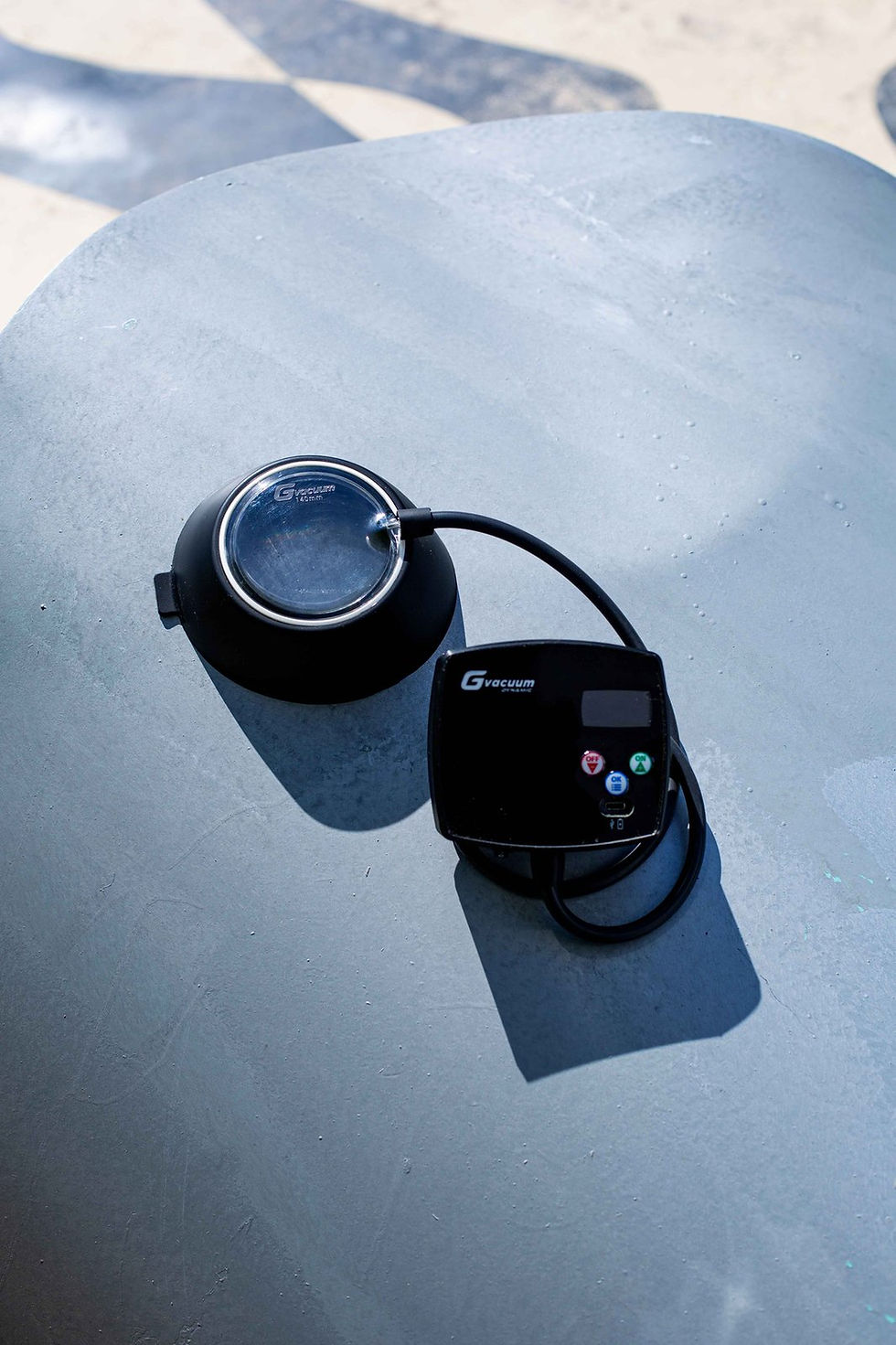
In light of these literature findings, a vacuum device's ability to deliver consistent pressure and track usage data becomes clinically meaningful. Gvacuum Dynamic Lite is designed with a 10-step pressure setting and target-pressure maintenance to help keep pressure stable within the intended range.
Gvacuum Dynamic Pro, meanwhile, uses BLE connectivity and a mobile app to log pressure, duration, and frequency parameters and relay them to a doctor portal - which directly maps onto what the literature emphasizes: the need to track daily-use compliance. It's worth being explicit here: this describes the product's technical features; it does not represent a specific success rate or guarantee - such claims would first need to pass scientific, legal, and regulatory review before being made public.
Practical Takeaways for Clinicians and Families
The literature findings offer families and clinicians a few concrete takeaways: setting a clear daily wear-time goal, regularly tracking adherence to that goal, and revisiting the pressure setting over time based on the patient's tolerance.
If skin irritation, discomfort, or unexpected symptoms occur, it's recommended to contact the treating clinician rather than adjusting wear time independently - pressure and duration settings are parameters that need to be tailored to each patient's individual situation.
It's also worth noting that compliance isn't purely a technical matter: especially in child and adolescent patients, motivation to stick with a daily routine is directly shaped by family support and how smoothly the treatment fits into daily life.
Frequently Asked Questions
How many hours a day should vacuum bell therapy be used?
The literature reports that around 6 hours of daily use during puberty improved treatment effectiveness [3], but the exact duration should be set based on the patient's age, chest wall flexibility, and the treating clinician's assessment.
Does vacuum bell therapy produce the same result for everyone?
No. Studies show that factors such as age, chest wall flexibility, and consistency of use affect outcomes [4]; an individual result cannot be guaranteed.
Does vacuum bell therapy replace surgery?
It may be considered as a non-surgical option for some patients, but suitability must be assessed individually by the treating clinician.
Conclusion
Pressure consistency and adherence to daily wear time are two variables the literature increasingly points to in vacuum bell therapy. A device designed to support both - one that can hold pressure within the intended range and make usage data visible - makes it easier for clinicians to make decisions and for families to track the process.
Sources
[1] Obermeyer RJ. Incorporating vacuum bell therapy into pectus excavatum treatment. J Vis Surg. 2016.
Contact Us
Have questions? Talk to our team about pectus treatment products and the right solution for you.