Can You Use a Vacuum Bell and a Chest Brace Together? How Combined Treatment Is Sequenced
Some children and teenagers present with more than one chest wall feature at once: part of the chest may be sunken inward (pectus excavatum, sometimes called a funnel or shoemaker's chest), while another area protrudes outward (pectus carinatum, or pigeon chest) or the lower ribs flare out (rib flare). Families in this situation often ask the same question: can a vacuum bell and a brace be used together, or does one have to come first?
This article does not propose a treatment schedule for any specific patient. Instead, it brings together general clinical principles and published research on non-surgical chest wall treatment to explain how combined use is typically approached. Answering the “can they be combined” question really requires understanding how each device works and how daily wear is weighed against the other.
Nothing here is meant to replace an individualized treatment plan - the exact sequence and timing for any patient should always be determined by the treating clinician, based on that patient's anatomy and stage of growth.
What Does a Mixed Chest Wall Presentation Look Like?
In the chest wall deformity literature, mixed presentations - where the same patient shows both an inward and an outward component - are a recognized, if less common, pattern. This isn't considered two unrelated conditions, but rather the same underlying growth process expressing itself differently across different regions of the chest wall. Mixed presentations are reported less frequently than single-direction ones and are typically confirmed through physical examination, with imaging used when needed.
Why Vacuum Bells and Braces Work in Opposite Directions
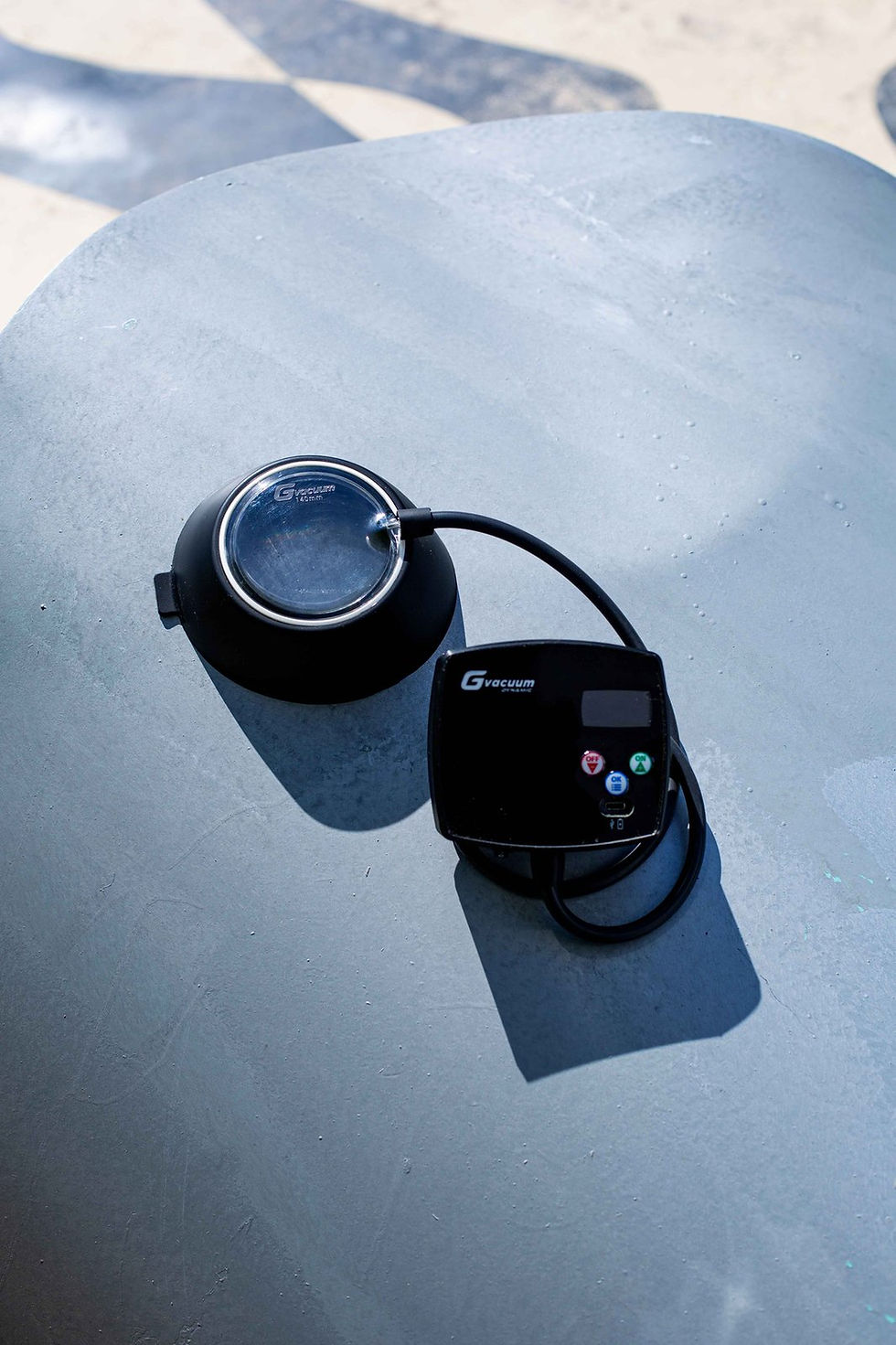
A vacuum bell applies controlled negative pressure (suction) to the sunken area of the chest wall, encouraging the cartilage to gradually reshape outward over time [1][2]. A brace works on the opposite principle: it applies controlled external compression to the protruding area, encouraging the cartilage to reshape inward. Because the two devices work in opposite force directions and target different regions, a patient with a mixed presentation could theoretically benefit from both - but that doesn't automatically mean both should be worn at the same time, in the same way.
Why Combined Treatment Is Usually Sequenced Rather Than Simultaneous
The first reason is practical: the regions targeted by the two devices can be close together or adjacent on the chest wall, which can make it harder to manage two different pressure sources on the skin and soft tissue at once. The second is behavioral: both treatments require consistent daily wear for a set number of hours, and adding two separate devices to a patient's daily routine at the same time can increase the overall burden of staying compliant with either one.
Published research on both treatments points to the same underlying pattern - outcomes depend heavily on how consistently the patient wears the device as prescribed [3][4]. For that reason, clinicians may prefer to confirm a patient can adhere to one treatment before introducing a second, rather than starting both simultaneously - a practical way of protecting the effectiveness of the combined approach.
What Does the Literature Say About Compliance?
Studies on vacuum bell therapy repeatedly identify consistent daily wear time as one of the most decisive factors in treatment success [2][3] - a finding that holds regardless of the specific device used. This tells us that outcomes depend as much on the patient's daily experience as on the device's technical design.
A similar pattern appears in the pectus carinatum bracing literature: gradual compression combined with the patient's day-to-day adherence to that compression has been identified as central to both comfort and outcome [4][5]. Both bodies of literature converge on the same underlying principle - the device matters, but the daily routine around it matters just as much.
How Is Sequencing Decided in Clinical Practice?
As a general approach, clinicians often start by addressing whichever feature is clinically more prominent or a higher priority to monitor - this can depend on which aspect of the presentation needs closer functional or developmental follow-up. Once one treatment begins, regular reassessment determines when, or whether, a second device is introduced.
It's worth being direct about one thing: there is no single, universally accepted sequencing protocol for mixed chest wall presentations in the published literature. The approach varies from patient to patient based on the treating clinician's judgment - this article does not present any one sequence as the “correct method,” only the general principles clinicians tend to weigh.
Practical Considerations When Combining Treatments
When two devices are both part of a daily routine, skin integrity becomes an important thing to monitor - checking regularly for irritation or sensitivity in the areas under pressure. How the daily wear hours are split - for example, one device during the day and the other in the evening - should be planned together with the treating clinician.
Because anatomy continues to change during growth, the fit of both devices should be reassessed at regular intervals. It's also worth acknowledging that managing two treatment routines at once can add to the motivational load for a child or adolescent patient - which is where family support and consistent clinical follow-up become especially valuable.
A simple tracking habit can also help during this process: keeping brief notes on which device was worn and when can give the treating clinician a clearer overall picture of adherence at the next check-up. This isn't about constant monitoring of the patient or family - it's a practical habit that can help catch potential gaps in the routine early.
Frequently Asked Questions
Can a vacuum bell and a brace be worn on the same day?
This depends on the patient's anatomy and the treating clinician's assessment. In some cases, both devices can be worn at different times within the same day; in others, the clinician may prefer to focus on one treatment first. The specific decision should always be made together with the treating physician.
Does combined treatment take longer than using either device alone?
No fixed duration can be guaranteed - each patient's timeline depends on the specifics of the deformity and how consistently the treatment plan is followed. Published studies focus less on predicting exact duration and more on how compliance shapes the outcome.
How is it decided which treatment starts first?
That decision is made by the treating clinician based on which feature needs closer clinical priority, the patient's age, and their overall tolerance. There is no single fixed rule in the literature - each case is evaluated individually.
Why does family support matter in this process?
Keeping track of two separate devices at once takes extra motivation, especially for a child or adolescent patient. A family that helps with reminders about wear schedules, supports skin checks, and keeps up with regular follow-up appointments plays an important role in making the process sustainable.
Conclusion
For patients with a mixed chest wall presentation, combining vacuum bell and brace treatment can be appropriate, but that doesn't mean applying both at the same time by default. The literature on both treatment types consistently points to daily wear compliance as one of the most important factors in outcome - which means decisions about combining them should be made individually by the treating clinician, with an eye toward whether the patient can realistically sustain that compliance for both devices at once.
Sources
[1] Obermeyer RJ. Incorporating vacuum bell therapy into pectus excavatum treatment. J Vis Surg. 2016.
Contact Us
Have questions? Talk to our team about pectus treatment products and the right solution for you.